

The photovoltaic industry has entered an era where gigawatt-scale manufacturing is the baseline. Yet the margin between a profitable module and a warranty liability increasingly depends on process precision at the intersection of cell interconnection, encapsulation, and intelligent quality assurance. For plant managers evaluating next-generation production lines, the stack—the integrated sequence of cell handling, string assembly, layup, bussing, lamination, and inspection—represents both the greatest operational challenge and the most significant opportunity for competitive differentiation.
Modern PV module manufacturing is a multi-step, precision-driven process where tabbing, stringing, layup, bussing, and lamination must operate seamlessly at high throughput. The stack is not merely a physical assembly of glass, encapsulant, and cells; it is a controlled manufacturing workflow where each layer's alignment, bonding integrity, and optical clarity directly determines the module's 25-year performance trajectory.
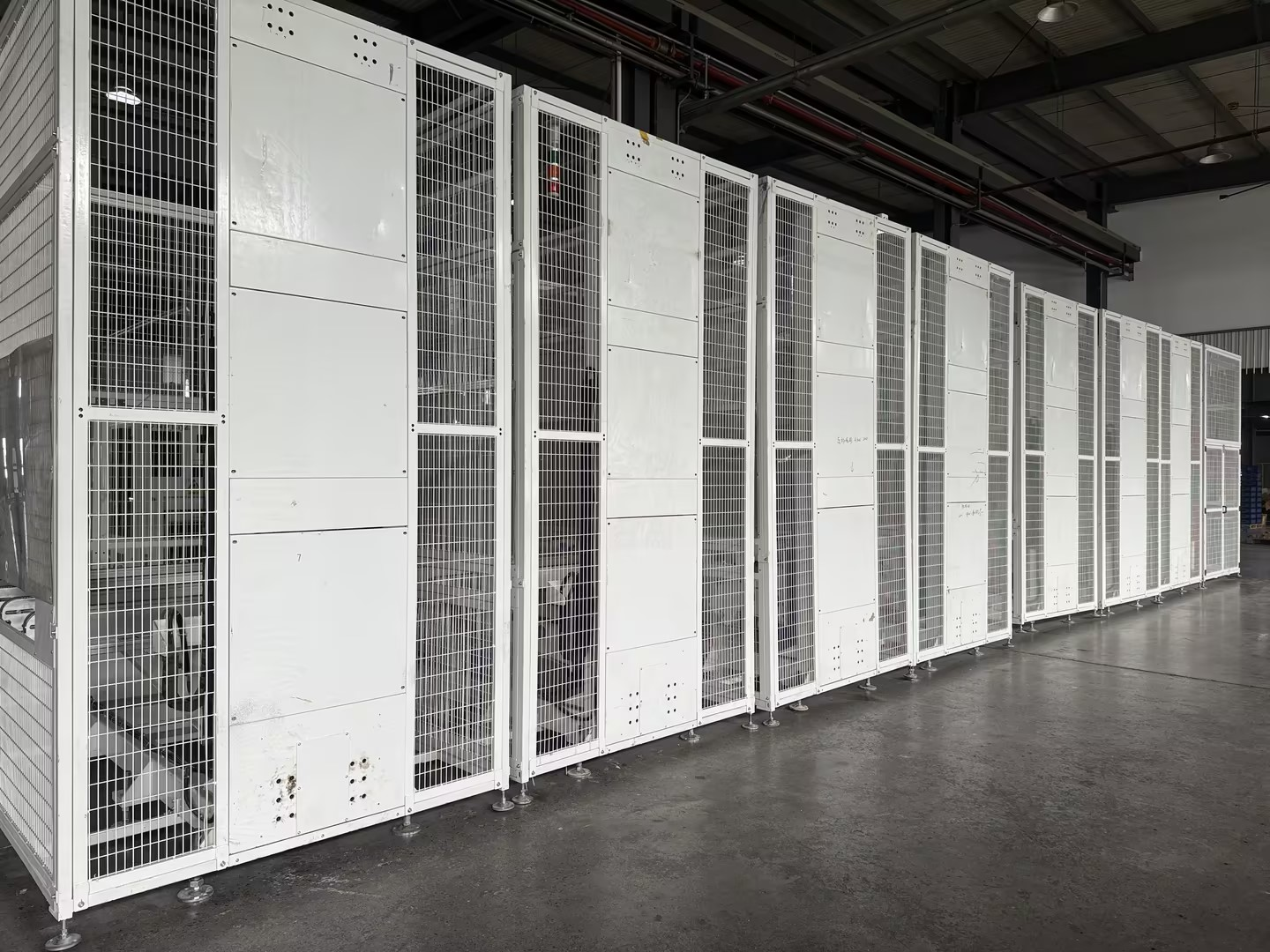
The Anatomy of a High-Performance Stack
Tabbing and Stringing
The process begins with tabbing and stringing, where ribbon wires are soldered to cell busbars to establish series connections. Modern combined tabber-stringer equipment operates at high speeds, but with speed comes risk: misalignment, microcracks, and soldering defects can propagate undetected if inline inspection is inadequate. A high-performance stack line integrates vision inspection at both cell input and string output stages, enabling real-time defect detection before defective strings enter downstream processes.
Layup and Bussing
Following stringing, the auto layup station positions cell strings onto the front glass and encapsulant. The precision of this stack assembly determines the final module's electrical and aesthetic characteristics. Bussing—the interconnection of multiple strings into a complete electrical circuit—has evolved into fully automated operations. Auto-bussing machines now handle busbar cutting, bending, and positioning with cycle times of 20–22 seconds per module, achieving capacities exceeding 300 MW annually. These systems employ electromagnetic induction welding with precise temperature control, ensuring high-tension solder joints while minimizing thermal stress on sensitive cell structures.
Lamination and Encapsulation
The lamination station is where the stack achieves environmental resilience. Under vacuum and elevated temperature, encapsulant materials—typically EVA, POE, or advanced thermoplastic polyolefins—melt and bond the cell matrix between front glass and backsheet. The process parameters are unforgiving: insufficient vacuum leads to bubbles and delamination; excessive temperature causes cell microcracks; inadequate pressure results in weak interfacial adhesion. Modern laminators maintain cavity temperature uniformity within ±2°C and vacuum levels below 0.095 MPa, with intelligent PLC systems managing recipe execution and process data logging.
The choice of encapsulant fundamentally shapes the stack's long-term reliability. While EVA remains dominant, polyolefin elastomers (POE) and thermoplastic polyolefins (TPO) are gaining traction due to superior hydrolysis resistance and reduced potential-induced degradation (PID). Research demonstrates that glass-glass modules with TPO encapsulants can endure 7,000 hours of damp-heat testing—seven times the IEC standard—without measurable power degradation, while EVA-laminated modules under identical conditions exhibit losses of 19.5% to 40%.
Quality Inspection: The Embedded Gatekeeper
In a fully automated stack line, inspection is not a post-process formality; it is an embedded quality architecture. Electroluminescence (EL) imaging before and after lamination is critical because defects become irreversible once the module is sealed. Advanced systems integrate vision systems for cell crack detection, infrared thermography for hot-spot identification, and EL imaging for microcrack detection and electrical continuity verification.
The gel content of encapsulant material is a direct indicator of lamination quality and long-term durability. Studies show that only two-thirds of field-extracted EVA samples from operational modules meet appropriate gel content thresholds, indicating widespread process control deficiencies. A robust stack line must incorporate inline or rapid offline gel content verification to ensure every module meets specification before leaving the factory.
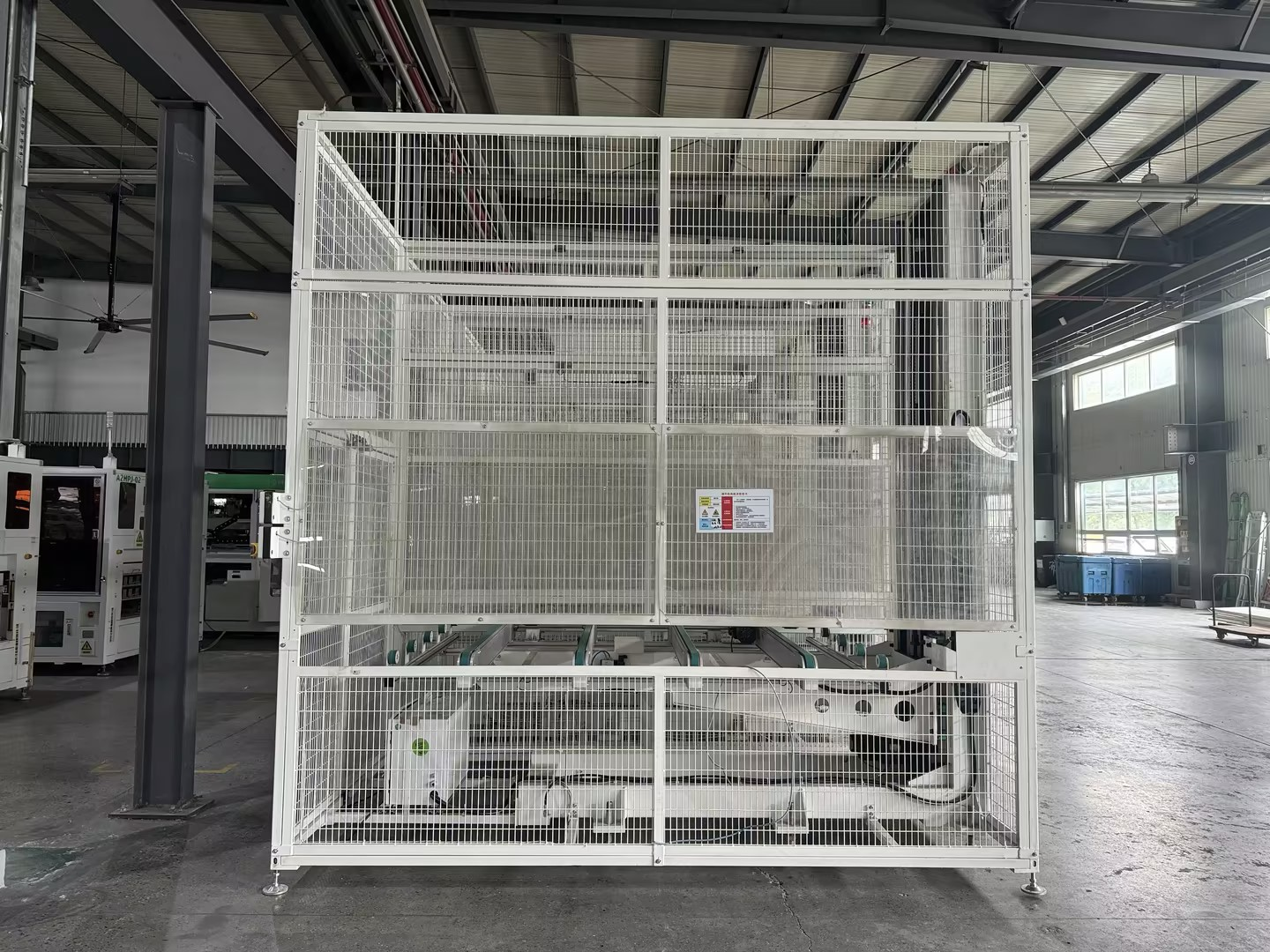
Intelligent Monitoring: The Digital Backbone
The integration of IoT and artificial intelligence has transformed the stack from a mechanical assembly sequence into a data-driven, self-optimizing system. IoT-enabled sensors monitor cell temperature, lamination chamber pressure, encapsulant flow characteristics, and electrical output in real time, transmitting data to cloud-based analytics platforms.
This connectivity enables predictive maintenance algorithms to identify equipment degradation before it impacts product quality. Temperature sensor drift in a laminator heating plate can be detected and corrected before it causes non-uniform encapsulant curing. Vibration analysis on bussing machine servo motors can predict bearing failure and schedule maintenance during planned downtime.
Advanced systems employ machine learning models for fault classification and power prediction, achieving diagnostic accuracies exceeding 98% for common failure modes. For multi-gigawatt manufacturing facilities, this intelligence layer translates directly into yield improvement, warranty cost reduction, and enhanced brand reputation.
The Bluemann Advantage: Integrated Stack Solutions
What distinguishes Bluemann in photovoltaic automation is a systems-level approach to the stack that transcends individual machine specifications. Rather than offering discrete stations that plant engineers must integrate, Bluemann designs complete production ecosystems where stringing, layup, bussing, lamination, inspection, and intelligent monitoring operate as a unified, data-coherent workflow.
Bluemann's stack solutions feature:
-
Precision cell handling systems with sub-millimeter placement accuracy and integrated crack detection, ensuring only defect-free cells enter the stringing process
-
Adaptive bussing stations compatible with 4 to 15 busbar cell architectures, with automatic recipe switching based on production scheduling
-
Multi-chamber laminators with symmetrical heating plate designs achieving vacuum levels of 38 Pa within 120 seconds and temperature uniformity within ±1.3°C, supporting cycle times under eight minutes
-
Inline EL and vision inspection at multiple process checkpoints, with AI-powered defect classification and automatic reject routing
-
Intelligent monitoring platform with MES integration, real-time process analytics, and predictive maintenance alerts, enabling remote diagnostics and continuous process optimization
The engineering philosophy is rooted in the understanding that a stack line is only as strong as its weakest integration point. Bluemann's technical team collaborates with client engineering staff during the line design phase to specify material flows, buffer capacities, and quality gate strategies that match the facility's target capacity and product mix.
Conclusion
As module efficiencies approach theoretical limits and cell technologies evolve toward heterojunction, TOPCon, and perovskite tandems, competitive differentiation will increasingly derive from manufacturing precision rather than cell architecture alone. The stack—encompassing cell handling, interconnection, encapsulation, inspection, and intelligent monitoring—is the critical domain where this precision is realized.
Bluemann's integrated stack solutions represent a strategic investment in manufacturing capability, delivering not just equipment but an engineered production ecosystem optimized for yield, reliability, and total cost of ownership. For manufacturers positioning themselves to serve the next decade of solar deployment, the choice of stack technology partner is as consequential as the choice of cell supplier.