
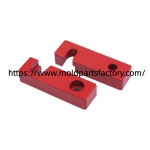

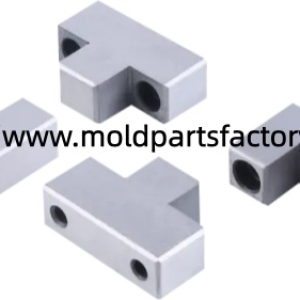
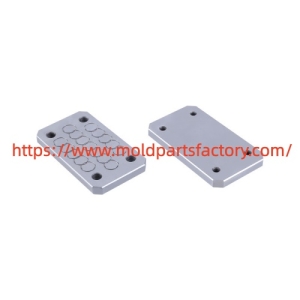
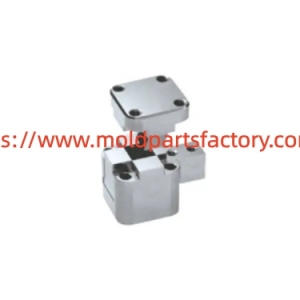
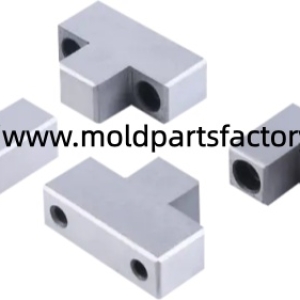
Mold Safety Lock serves as a dedicated securing component that holds tool halves in a fixed position while staff perform cleaning, inspection, or adjustment work. Teams in injection workshops rely on this unit to reduce unexpected movement and create a controlled setting for hands-on tasks.
Daily care of injection tools involves several repeated steps that demand stability. Operators often open the tool to remove residue, check surface condition, or replace worn inserts. Without a reliable way to keep the halves from shifting, the risk of sudden closure rises. The device addresses this by creating a physical barrier that holds the halves apart or together as needed until the work finishes.
Installation of the unit usually takes place on designated mounting points along the tool edge. Staff clean the contact area first so the component seats firmly. Once in place, a simple engagement action activates the hold. Many workshops schedule a quick visual check of the unit at the start of each shift. This habit confirms that the mechanism remains free of debris and ready for immediate use.
During actual maintenance windows the device proves its value in several ways. First, it frees both hands of the technician so focus stays on the task rather than on holding heavy sections. Second, it allows multiple people to work around the tool at the same time without concern over accidental closure. Third, it supports safer transport of tool halves when the unit travels between the machine and the care bench.
Material choice for the component matters for long-term service. Common versions use hardened alloy that resists wear from repeated cycles. Some designs incorporate a quick-release feature that shortens the time needed to engage or disengage. Workshops that run high-volume production often prefer units rated for frequent activation because the care schedule stays tight.
Integration with existing tool standards helps the device fit smoothly into established routines. Many suppliers size the unit to match common plate thicknesses and bolt patterns. This compatibility reduces the need for custom machining and keeps downtime low when a replacement becomes necessary.
Training plays a quiet but important part in daily use. New staff learn the correct engagement sequence and the visual signs that indicate proper seating. Experienced operators share short observations about how the unit behaves under different tool weights. These shared notes build a practical knowledge base that supports consistent performance across shifts.
Periodic inspection of the component itself belongs on the care checklist. Staff look for signs of wear on contact surfaces, confirm that moving parts still travel freely, and verify that mounting fasteners remain tight. Early detection of any change allows a planned swap rather than an unplanned stop.
Storage of spare units also receives attention in well-run facilities. Keeping a clean, dry location for extras ensures that a ready replacement sits nearby when needed. Labeling each spare with its size and application range further speeds selection during busy periods.
The device contributes to overall process order by creating predictable conditions. When every maintenance window begins with the same securing step, the sequence becomes routine. This predictability helps supervisors plan staffing and reduces the chance of rushed decisions under time pressure.
Workshops that adopt the unit often notice smoother hand-offs between production and care teams. The production side knows the tool will return in a controlled state, while the care side gains confidence that the work area stays stable. Over time these small gains accumulate into more reliable output schedules.
Selecting the right size and style depends on tool weight, plate thickness, and the frequency of care cycles. Larger tools generally call for units with greater holding capacity, while compact tools favor lighter designs that still provide firm retention. Consulting the supplier dimensional charts helps match the component to the actual application.
Moldpartsfactory offers a range of these securing units designed for straightforward mounting and repeated daily use. The company focuses on practical dimensions and durable materials that align with common workshop needs.
Regular attention to the device keeps it ready for every care interval. By treating the unit as a standard part of the maintenance sequence rather than an optional extra, teams create a more orderly and controlled work environment.
Further product details and sizing options appear at https://www.moldpartsfactory.com/product/ where teams can review available configurations that support daily care routines.