

For businesses purchasing food paper in commercial quantities, understanding how the material is produced can provide useful insight into consistency and application suitability. A Parchment Paper Factory typically manages multiple stages, beginning with base paper selection and continuing through coating, converting, inspection, and packaging. Each stage can influence the final material, making integrated production and quality management important considerations for international buyers.
Base paper selection establishes the physical foundation of the product. Paper used for food applications needs to provide suitable handling characteristics while offering a surface that can receive the required treatment. Uniformity in the substrate can help downstream processes operate more consistently. Differences in paper formation, surface condition, or moisture can influence coating behavior and subsequent converting.
The coating stage is central to the development of release properties. Silicone is commonly used to treat food paper because it can create a surface that helps reduce adhesion between the paper and prepared foods. For practical baking applications, uniform coating coverage is important. A controlled coating process helps reduce variations across the paper surface and supports more predictable behavior when the material is used with dough, fats, oils, or baked products.
Coating quality is connected to both equipment and process management. Production teams need to control the conditions under which the coating is applied and monitor the resulting surface. Visual inspection and other appropriate quality checks can help identify coating irregularities. Maintaining stable processing conditions also helps reduce unnecessary differences between production batches.
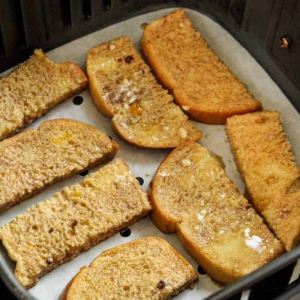
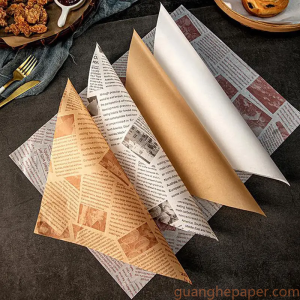
After coating, large rolls can be processed into formats suited to different applications. Slitting allows manufacturers to produce narrower rolls, while cutting can create individual sheets. Additional forming processes can be used for applications such as air fryer liners. The ability to handle different downstream processes allows food paper to be adapted to the requirements of bakeries, food manufacturers, restaurants, and distributors.
Dimensional consistency is particularly useful in professional environments. When sheets have predictable dimensions or rolls maintain consistent widths, users can incorporate them more easily into established workflows. Automated or semi-automated equipment may also depend on consistent material dimensions for feeding and positioning. For this reason, converting accuracy should be considered alongside the characteristics of the coated paper itself.
Inspection is another important production stage. Quality checks may focus on surface condition, coating appearance, dimensions, packaging condition, and other characteristics defined by the production and application requirements. Effective inspection helps identify potential issues before the finished products are shipped, reducing the possibility of avoidable problems further along the supply chain.
Food-contact considerations extend beyond the paper itself. Manufacturing areas, handling procedures, packaging systems, and storage practices all contribute to maintaining product integrity. Buyers should request relevant documentation for the specific product and intended market because food-contact regulations and requirements may vary between regions. Certifications or declarations should be reviewed according to their actual scope rather than treated as universal approval for every application.
Packaging protects the finished product during transportation and storage. Rolls and sheets can be exposed to changing humidity, dust, compression, and handling conditions throughout international logistics. Suitable packaging can help preserve the physical condition of the material until it reaches the customer. Warehousing practices should likewise provide an environment appropriate for paper-based food-contact materials.
A Parchment Paper Factory that manages coating and converting within an integrated workflow can also communicate more directly with buyers about production requirements. This can be useful when customers need customized dimensions, specific roll or sheet formats, or different packaging arrangements. Instead of treating customization as a separate purchasing issue, production teams can evaluate it alongside available equipment and process capabilities.
From a procurement perspective, factory evaluation should include more than production capacity. Buyers can examine the consistency of raw materials, coating management, converting processes, inspection procedures, packaging methods, documentation, and communication practices. These factors provide a broader understanding of whether a manufacturer can support the buyer's intended application and ongoing supply requirements.
Modern food paper production combines material science with practical converting technology. Stable substrates, controlled coating, accurate slitting and cutting, systematic inspection, and suitable packaging form a connected production chain. Guanghe operates an integrated process for silicone-coated food paper and related products, and buyers can review available baking and food paper solutions at https://www.guanghepaper.com/product/ when assessing formats for their own applications.