





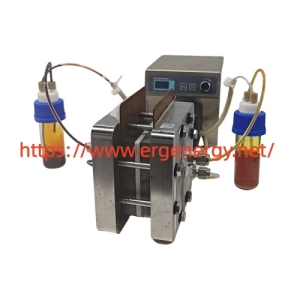

Laboratory Single Cell Battery testing helps researchers examine the electrical behavior of individual battery cells under controlled experimental conditions. For battery developers, university laboratories, material researchers, and testing organizations, these experiments provide useful information about charging response, discharge capacity, voltage stability, and operating characteristics. Selecting suitable testing equipment requires a clear understanding of the research objective, the cell chemistry, the required measurement range, and the conditions under which experiments will take place.
Battery development often begins with small scale experiments before researchers evaluate larger assemblies or complete systems. Testing individual cells allows engineers to investigate specific variables without introducing all the complexities associated with modules and packs. Researchers can compare different electrode materials, electrolyte formulations, cell designs, and manufacturing processes while keeping the experimental setup manageable. This approach supports early stage evaluation and helps identify questions that need further investigation.
A well planned experiment starts with a defined objective. Some studies focus on discharge capacity, while others examine charge acceptance, voltage response, internal resistance, or changes during repeated cycling. The testing protocol should identify the parameters to be measured, the operating limits, and the conditions that must remain consistent between samples. Without a clear procedure, differences in results may reflect variations in the experiment rather than changes in the cell itself.
Measurement capability is a key consideration when choosing laboratory equipment. Voltage and current ranges should match the specifications of the samples being tested. Researchers should also examine measurement resolution, data sampling frequency, channel configuration, and the ability to record results throughout a test. For projects involving several samples, independent channels can make it easier to conduct parallel experiments and compare results under similar conditions.
Temperature control may also be necessary, depending on the research question. Temperature can influence electrochemical reactions, internal resistance, available capacity, and charging behavior. If a study compares samples under different thermal conditions, researchers should document the temperature settings and maintain a consistent procedure. Equipment compatibility with environmental chambers or other laboratory instruments may therefore be an important purchasing consideration.
Safety planning is essential when conducting battery experiments. Cells can generate heat, release gas, or experience abnormal voltage behavior under certain conditions. Researchers should select equipment with protection functions appropriate to the cell chemistry and test requirements. Depending on the application, useful safeguards may include voltage limits, current limits, temperature monitoring, automatic test interruption, and alarm functions. Laboratory procedures should also address sample handling, ventilation, emergency response, and the safe management of damaged cells.
Data management deserves equal attention. Testing software should allow researchers to configure test steps, define limits, review live measurements, and export recorded results for further analysis. Clear file naming and sample identification procedures help preserve the connection between experimental data and the cells being examined. When multiple researchers work on the same project, consistent documentation can make results easier to review, reproduce, and share.
Researchers should also distinguish between individual cell measurements and the behavior of a complete battery system. A cell test can provide detailed information about a particular sample, but it cannot independently predict every aspect of a module or pack. Thermal interaction, electrical connections, battery management settings, and differences between cells can influence system level behavior. Additional validation may be needed before laboratory findings are applied to a commercial product.
Before purchasing testing equipment, laboratories should prepare a list of technical requirements. Important details include cell chemistry, sample dimensions, voltage range, current range, expected test duration, temperature requirements, channel count, software functions, and available laboratory space. Buyers should request technical documentation and confirm whether the proposed configuration can support their planned procedures. It is also useful to discuss calibration, maintenance, training, spare parts, and technical support before finalizing an order.
ERG works with energy related product requirements and industrial project needs. Research teams evaluating equipment for battery development can clarify their testing objectives, required measurement functions, and laboratory conditions before discussing suitable configurations. A clear specification helps connect research goals with practical equipment selection and supports more efficient communication during procurement. To review relevant product information and discuss potential requirements, visit https://www.ergenergy.net/product/ and contact ERG about solutions that may fit your laboratory project.