
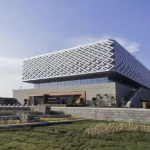

Modern architecture increasingly relies on glass to create bright, open, and visually striking buildings. From airport terminals and commercial complexes to exhibition centers and public facilities, glass curtain walls have become an important element of contemporary building design.
As building technology advances, PDLC smart glass is gaining attention for its ability to switch between transparent and privacy states through electrical control. However, selecting smart glass for an exterior curtain wall involves more than choosing a suitable film or comparing product prices. It requires careful consideration of glazing construction, optical performance, electrical integration, environmental durability, and manufacturing capabilities.
For architects, facade consultants, and construction contractors, understanding these factors early can help reduce design conflicts and improve project delivery.
1. Start With the Building's Functional Requirements
Every building has different requirements for daylight, privacy, visual appearance, and operational flexibility. A glass facade designed for an airport may have different priorities from one intended for an office building or exhibition center.
Before selecting a PDLC smart glass solution, project teams should evaluate how each space will be used and how the facade will interact with its surroundings.
Important considerations include:
-
Building function and interior layout
-
Facade orientation and sunlight exposure
-
Desired transparency and privacy levels
-
Daylight requirements and visual comfort
-
Panel dimensions and architectural design
-
Local climate and environmental conditions
-
Electrical control methods and operating schedules
For example, a public lobby may prioritize natural light and outward visibility, while meeting areas may require more flexible privacy control. Identifying these differences early makes it easier to develop an appropriate glazing specification for each area.
2. Select the Right Glass Structure
PDLC smart glass is part of a complete glazing assembly rather than an independent material. Its suitability for an exterior curtain wall depends on the glass construction and the performance requirements of the building envelope.
Depending on the project, the proposed system may involve laminated glass, insulated glazing, or a customized composite structure. Each option must be evaluated against the relevant requirements for safety, thermal insulation, acoustic performance, structural design, and environmental exposure.
The specification should also address glass thickness, interlayer materials, edge processing, sealing details, and compatibility with the curtain wall framing system.
Project teams should therefore discuss the complete glass configuration with the supplier before finalizing the design. A specification that focuses exclusively on PDLC film thickness or switching performance cannot establish whether the finished glazing assembly is suitable for the intended application.
3. Define Optical Performance Before Comparing Products
Optical performance has a direct impact on the appearance and usability of an architectural smart glass facade.
Two parameters deserve particular attention: visible light transmittance (VLT) and haze.
VLT describes the proportion of visible light transmitted through the glazing under specified measurement conditions. Haze indicates the extent of light scattering and is particularly relevant when evaluating the appearance of smart glass in its privacy state.
These values should be selected according to the intended function of the space rather than copied directly from a standard product catalogue.
For a daylight-oriented public space, maintaining adequate light transmission may be a priority. In areas requiring greater visual separation, the appearance and light-diffusing characteristics of the privacy state may be more important.
Project teams should also evaluate:
-
Transparency in the normal operating state
-
Privacy performance in the switched state
-
Color consistency between adjacent panels
-
Visual uniformity across the facade
-
Glare and solar exposure considerations
-
Appearance under different lighting conditions
For large curtain wall installations, a representative mock-up can help architects and facade consultants assess these characteristics before approving mass production.
4. Coordinate Panel Dimensions and Manufacturing Limits
Large-format glazing introduces additional engineering and logistical considerations. Panel dimensions influence glass weight, transportation, lifting arrangements, installation procedures, and future replacement requirements.
Customized shapes and oversized panels may also require specialized processing capabilities.
In addition to confirming the maximum and minimum available dimensions, project teams should review the following details with the manufacturer:
-
Glass shape and dimensional tolerances
-
Processing and edge-finishing requirements
-
Busbar positioning and electrical connection direction
-
Cable exit locations
-
Transportation and handling arrangements
-
Compatibility with curtain wall profiles
-
Installation sequence and site access
These details should be resolved before the curtain wall shop drawings are finalized. Early coordination helps prevent manufacturing limitations from becoming expensive design changes during construction.
5. Integrate Electrical Connections and Control Systems Early
The switching function of PDLC smart glass depends on an electrical field applied across the functional layer. Consequently, electrode and busbar arrangements are closely related to glass fabrication and facade integration.
Electrical planning should begin during the design stage rather than after the glazing specification has been completed.
The engineering team needs to establish where electrical connections will be located, how cables will leave each panel, and how wiring can be concealed within the curtain wall system.
Power supplies, controllers, cable routes, and maintenance access should also be considered as part of the overall electrical design.
Control zoning is another important factor. Large facades rarely need every panel to operate as a single group. Separate zones may be more appropriate for different floors, meeting rooms, facade sections, or functional areas.
A well-designed zoning strategy allows building operators to adjust the smart glass according to actual usage while simplifying fault isolation and maintenance.
6. Evaluate Durability for Exterior Applications
Exterior curtain walls face environmental conditions that differ considerably from those encountered by interior privacy partitions.
Depending on the project location, the glazing system may be exposed to strong solar radiation, humidity, rain, condensation, temperature fluctuations, and repeated thermal cycling.
These conditions make it essential to assess the complete glazing assembly rather than focusing only on the PDLC material.
Relevant considerations include glass construction, lamination quality, edge sealing, electrical connection protection, framing interfaces, and installation workmanship.
Project teams should request technical documentation demonstrating suitability for the intended application. Where applicable, this may include test reports, environmental performance data, and information about the complete glazing configuration.
Requirements should be established according to the actual climate, facade design, applicable building codes, and project-specific performance criteria.
7. Choose a Supplier With Integrated Manufacturing Capabilities
The quality of a smart glass curtain wall depends not only on the selected materials but also on the manufacturer's ability to coordinate the production process.
An experienced supplier should understand the relationship between functional film, glass processing, lamination, electrical connections, quality inspection, and final delivery.
For customized architectural projects, integrated manufacturing capabilities can be particularly valuable because decisions made during material production can be coordinated with downstream fabrication requirements.
Zhuhai Shuifa Singyes New Materials has developed production capabilities covering ITO film production, PDLC formulation development, PDLC film manufacturing, cut-to-size processing, and glass lamination.
This range of capabilities is relevant to projects that require customized dimensions, coordinated material processing, and consistent production across multiple glazing panels.
When evaluating suppliers, project teams should also review manufacturing capacity, dimensional tolerances, quality control procedures, technical support, delivery schedules, and experience with comparable architectural applications.
8. Use Project References to Evaluate Real-World Experience
Previous architectural projects can provide useful context when assessing a manufacturer's ability to support large-scale smart glass applications.
Zhuhai Shuifa Singyes New Materials has supplied smart glass solutions for several major public building projects, including:
-
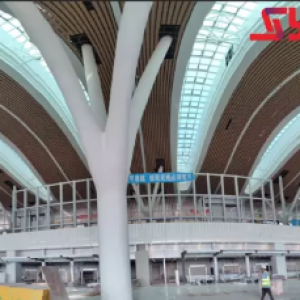
Guiyang Longdongbao Airport T3: Approximately 7,000 square meters of smart glass external curtain wall.
-
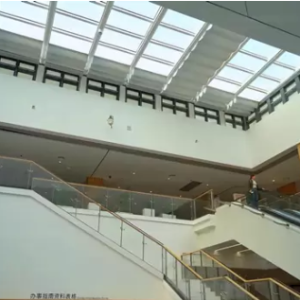
Hengqin Civic Center: Approximately 2,000 square meters of customized composite smart glass for a lighting roof.
-
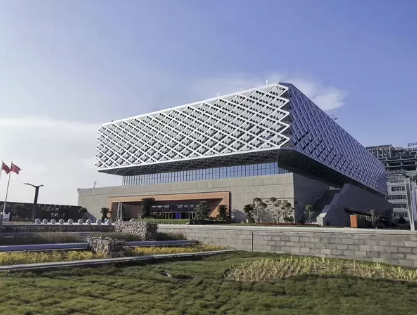
Ningbo Tongshan Future Community Exhibition Hall: Approximately 2,300 square meters of customized smart glass.
-
Shanxi Datong Energy Museum: Approximately 2,500 square meters of smart glass integrated with more than 230,000 lighting points.
These projects illustrate the range of architectural applications in which smart glass can be incorporated into larger building systems.
When reviewing project references, buyers should look beyond the total installed area. Manufacturing consistency, electrical coordination, transportation, installation requirements, and communication between project stakeholders are also important indicators of delivery capability.
9. Compare Total Project Cost, Not Just Glass Price
The price per square meter is an important purchasing consideration, but it does not represent the full cost of a smart glass curtain wall.
A project budget may include glazing materials, PDLC components, customized processing, power supplies, controllers, wiring, transportation, installation, commissioning, and future maintenance.
A lower initial material price may not result in lower overall expenditure if the system requires additional engineering, creates installation complications, or is difficult to service.
At the same time, unnecessary specifications can increase costs without delivering meaningful benefits to the building.
A practical supplier comparison should therefore consider technical compliance, production capability, installation complexity, delivery reliability, and expected service requirements alongside the quoted price.
10. Follow a Structured Selection Checklist
Before placing an order for PDLC smart glass, the project team should confirm that the major technical and commercial requirements have been addressed.
Building and facade design
-
Have the functional requirements of each area been defined?
-
Have facade orientation, daylight, privacy, and environmental conditions been evaluated?
Glazing construction
-
Has the complete glass assembly been specified?
-
Is the proposed configuration compatible with the curtain wall system?
Optical performance
-
Have VLT, haze, transparency, and privacy requirements been established?
-
Has the design team reviewed a representative sample or mock-up where necessary?
Dimensions and fabrication
-
Are all panel sizes and shapes within the manufacturer's confirmed capabilities?
-
Have processing tolerances, edge details, and transportation requirements been reviewed?
Electrical integration
-
Are busbar locations, cable exits, power supplies, and controller positions coordinated?
-
Does the control zoning reflect the building's functional layout?
Quality and durability
-
Can the supplier demonstrate suitable quality control and relevant performance testing?
-
Are the complete glazing assembly and its connections appropriate for the intended environment?
Installation and maintenance
-
Have installation, commissioning, inspection, and replacement procedures been considered?
-
Will technicians have practical access to electrical components after handover?
Commercial and delivery planning
-
Does the quotation cover the complete required system?
-
Are production capacity, lead times, packaging, and technical support clearly defined?
Addressing these questions before production can help reduce uncertainty and improve coordination among the architect, facade consultant, electrical engineer, contractor, and manufacturer.
Conclusion
Selecting PDLC smart glass for a building curtain wall is a system-level engineering decision. Optical performance, glass construction, electrical control, environmental durability, fabrication capabilities, and maintenance planning must work together to achieve the intended architectural result.
The most effective approach is to define the building's requirements first, establish a coordinated glazing and electrical specification, and then evaluate manufacturers against the complete project scope.
For large commercial and public building applications, working with a supplier that understands both PDLC technology and glass processing can help project teams manage customization, production consistency, and delivery requirements more effectively.
By treating smart glass as an integrated part of the building envelope rather than an isolated material purchase, architects and contractors can make more informed decisions and develop curtain wall solutions that better match the needs of modern architecture.