






A fast-growing software company finds the perfect data engineer in Poland. She can start next month. The problem is that the company has no legal entity in Poland, no local payroll, and no idea how Polish employment contracts, social contributions, or notice periods work. Setting up a subsidiary could take six months. The candidate will not wait that long.
This is the moment Employer of Record (EoR) solutions were built for. They let companies hire, pay, and manage talent in a new country quickly and legally, without a local presence. For CXOs, CHROs, and finance leaders, EoR has moved from a workaround to a core part of global workforce strategy.
Click Here For More Information: https://qksgroup.com/market-research/spark-matrix-employer-of-record-eor-solutions-q2-2026-10413
Market Overview: A Legal Employer and a Platform in One
QKS Group describes an Employer of Record (EOR) as a structured global employment model and supporting platform that lets organizations legally hire, pay, and manage workers in countries where they have no local legal entity. The EOR acts as the legal employer and takes responsibility for employment contracts, payroll, tax withholding, statutory benefits, labor law compliance, and ongoing employment administration.
Core capabilities typically include:
- Compliant employment contracts and onboarding
- Payroll processing and cross-border payments
- Statutory benefits administration
- Labor law and tax compliance management
- Workforce reporting and analytics
- Offboarding and termination support
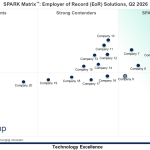
QKS Group's SPARK Matrix evaluates vendors including Atlas, BIPO, CXC Global, Deel, G-P, Links International, Mauve Group, Mercans, Multiplier, Neeyamo, Oyster, Papaya Global, Payoneer Workforce Management, Pebl, Remofirst, Remote, Remote People, Remundo, Safeguard Global, and Workmotion. The list reflects a market with global leaders, regional specialists, and fast-moving newcomers, all serving organizations of different sizes and operating models.
Key Challenges Businesses Face
International hiring is exciting, but it is rarely simple. Common obstacles include:
- Complex local employment law. Contracts, leave entitlements, notice periods, and termination rules differ widely by country.
- Slow entity setup. Establishing a subsidiary takes time and money, and delays hiring.
- Worker misclassification risk. Treating employees as contractors can lead to penalties and back payments.
- Tax and permanent establishment exposure. Hiring without proper structure can create unexpected corporate tax obligations.
- Payroll and benefits complexity. Each market has its own statutory contributions and customary benefits.
- Inconsistent employee experience. Remote hires may feel like second-class staff if onboarding and support are poor.
- Limited visibility. Without a central view, leaders cannot easily track international headcount and cost.
Key Trends and Innovations
Compliance automation. Platforms increasingly build local legal and tax rules into contracts and workflows, which reduces manual review.
AI-assisted operations. Automation supports document generation, query handling, and error detection in payroll and onboarding.
Faster onboarding. Digital contracts and e-signatures shorten the path from offer to start date.
Integrated global HR stack. Many providers combine EoR with global payroll, contractor management, and benefits, giving buyers one place to manage a distributed workforce.
Entity transition support. Companies can start with EoR and later move employees into their own local entity once scale justifies it.
Localized benefits and perks. Competitive packages, such as health coverage and equity administration, help attract talent in different markets.
Workforce analytics. Dashboards show cost, headcount, and compliance status across countries.
Employee-centric experience. Self-service portals and responsive support make remote employees feel part of the company.
Check SPARK Plus Study Here: https://qksgroup.com/sparkplus?market-id=477&market-name=employer-of-record-%28eor%29-solutions
Benefits and Business Impact
A strong EoR partnership delivers value across the business:
- Speed to market. Companies can hire in days or weeks instead of months.
- Reduced regulatory risk. The provider takes on legal employer responsibilities and local compliance.
- Lower setup cost. There is no need to invest in entities, local HR teams, or payroll systems before testing a market.
- Access to global talent. Hiring is no longer limited by geography.
- Operational simplicity. One provider handles contracts, payroll, benefits, and administration.
- Flexibility. Teams can scale up or wind down in a country without long-term commitments.
- Consistent experience. Employees receive reliable pay and support wherever they live.
Real-World Use Cases
Testing a new market. A retail technology firm wants to explore demand in Southeast Asia. It hires a small sales team through an EoR before deciding whether to open a local office.
Hiring specialist talent. A fintech company recruits scarce engineers in several European countries without waiting for entity setup.
Supporting expansion after an acquisition. An acquirer needs to keep employees paid and compliant in countries where it has no presence while integration plans are finalized.
Converting contractors to employees. A growing SaaS business moves long-term contractors onto compliant employment contracts to reduce misclassification risk.
Transitioning to a local entity. A manufacturer starts with EoR in a new country, then moves its team into its own subsidiary once headcount grows.
How to Choose the Right Solution
Begin with where you want to hire and how fast you need to move. Then evaluate vendors against these criteria:
- Country coverage and depth. Check real capability in your priority countries, not only the total list.
- Entity model. Ask whether the provider uses owned entities or relies on partners, and what that means for service quality.
- Compliance expertise. Review how legal and regulatory changes are tracked and applied.
- Platform experience. Test the manager and employee portals for ease of use.
- Pricing transparency. Understand fees, onboarding costs, and what is included.
- Integration. Confirm connections with your HRIS, payroll, and finance systems.
- Exit and transition support. Look for help converting to a local entity when the time comes.
- Vendor strength. Review customer references, support quality, and financial stability.
An independent benchmark simplifies shortlisting. QKS Group's SPARK Matrix compares vendors on capability, differentiation, and market position, giving buyers a structured view of the market.
Future Outlook (2026–2029)
Over the next few years, EoR will become more automated, more integrated, and more strategic. Expect AI to handle a larger share of contract drafting, compliance checks, and employee queries, while platforms combine EoR, payroll, contractor management, and benefits in a single experience.
Regulators are paying closer attention to worker classification and cross-border employment, which will raise the bar for compliance. Buyers will also look for clear paths from EoR to owned entities as their international footprint grows. Vendors that pair deep local expertise with a seamless platform and transparent pricing will lead the market.
Download Sample Report Here: https://qksgroup.com/download-sample-form/spark-matrix-employer-of-record-eor-solutions-q2-2026-10413
Conclusion
Talent no longer sits in one place, and hiring should not be limited by borders. A reliable Employer of Record solution lets companies move fast, stay compliant, and treat global employees well from day one.
For CXOs and HR leaders, the next step is simple: identify where you plan to hire, assess your compliance exposure, and compare vendors through an independent lens such as QKS Group's SPARK Matrix.