

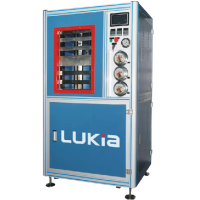
A Smart Card Production Line can be developed in stages rather than installed as a complete automated system from the beginning. For a small card producer, the first priority is often to establish reliable lamination and punching processes. Manual laminators and compact punching machines can support limited production volumes while allowing operators to understand material handling, temperature settings, pressure control, and finished-card dimensions. Before choosing this setup, buyers should consider the types of cards they intend to manufacture and whether the equipment can accommodate their required sheet sizes and materials.
Lamination is a critical stage because the card layers must bond under controlled conditions. For smart cards, the structure may also contain an embedded chip or antenna inlay, so the process needs to account for the materials inside the card. Temperature, pressure, holding time, and cooling conditions can influence bonding quality and dimensional stability. Buyers comparing laminators should examine how these parameters are controlled, whether heating and cooling are handled in separate stages, and how easily operators can repeat the same cycle across production batches.
As production grows, punching can become a bottleneck. Manual feeding requires operators to position sheets or strips before each operation, which can limit output and introduce variation in alignment. Automatic punching equipment uses a feeding mechanism and programmed controls to reduce repetitive manual handling. However, automation should be evaluated alongside die configuration, punching accuracy, changeover time, and maintenance requirements. A machine designed for one card format may not suit every product range without adjustments or additional tooling.
The relationship between lamination and punching also matters. If laminated sheets are not sufficiently stable or their dimensions vary, accurate punching becomes more difficult. A practical equipment plan therefore considers the entire process rather than selecting each machine independently. Buyers should confirm that the laminator's output format matches the punching machine's feeding requirements and that the production sequence allows material to be transferred without unnecessary delays.
Consumables are another part of the production plan. Card substrates, overlay films, inlay materials, and other process-specific supplies must be compatible with the selected equipment and intended card structure. Material specifications should be confirmed before bulk purchasing, particularly when changing suppliers or introducing a new card design. Trial runs can help identify differences in bonding behavior, thickness, and finished-card appearance before regular production begins.
When comparing a Smart Card Production Line, buyers should assess current output needs alongside likely changes in order volume. A compact configuration may be sufficient for a limited product range, while higher production demands may justify controlled hydraulic lamination and automatic punching. Planning around material compatibility, process coordination, and future capacity helps avoid investing in equipment that cannot support the next stage of production.