


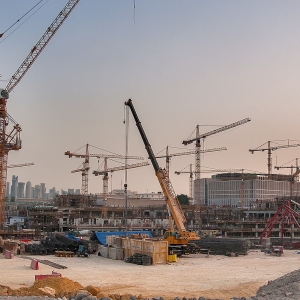

Dubai’s construction industry is known for its speed, scale, and complexity. From luxury residential towers and mixed use developments to airports, malls, and infrastructure projects, the city continues to push architectural and engineering boundaries. In such a demanding environment, even small design errors or coordination issues can lead to costly delays and rework. This is where BIM architecture has become a game changer for the Dubai market.
BIM architecture goes beyond traditional 2D drawings and isolated design processes. It introduces a collaborative, data driven approach that improves design accuracy and coordination across all project stages. For architects, developers, consultants, and contractors working in Dubai, BIM architecture is no longer optional. It has become an essential part of delivering successful projects.
Understanding BIM architecture in a Dubai context
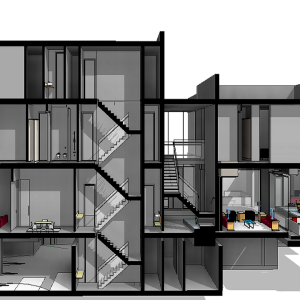
BIM architecture refers to the use of Building Information Modeling specifically within architectural design. It involves creating intelligent 3D models that contain detailed information about building elements such as walls, floors, facades, doors, windows, materials, and finishes. These models are not just visual representations. They are data rich and interconnected, meaning that any change made in one view is automatically updated throughout the entire model.
In Dubai, where projects often involve complex geometries, high rise structures, and premium finishes, this level of accuracy is critical. Architectural designs must align perfectly with structural systems, MEP services, local regulations, and client expectations. BIM architecture provides a single coordinated platform where all these requirements can be managed efficiently.
Why design accuracy matters in Dubai projects
Design accuracy is one of the biggest challenges in Dubai’s construction industry. Projects are often fast tracked, with overlapping design and construction phases. This increases the risk of errors if design information is incomplete or inconsistent.
In traditional design workflows, architects rely heavily on 2D drawings. These drawings can be open to interpretation and may not always reflect real world conditions. Misalignment between plans, sections, and elevations is a common issue. When these errors reach the construction site, they result in delays, material waste, and additional costs.
BIM architecture addresses these challenges by creating a single, coordinated digital model. Architects can visualize the entire building in 3D and understand how different elements interact with each other. This reduces guesswork and helps ensure that the design is accurate before construction begins.
For Dubai projects, where precision is expected and budgets are significant, this level of accuracy is essential.
Improving coordination between architectural and engineering disciplines
One of the strongest benefits of BIM architecture is improved coordination. In Dubai, projects typically involve multiple stakeholders, including architects, structural engineers, MEP consultants, contractors, and authorities. Coordination between these parties can be challenging, especially on large scale developments.
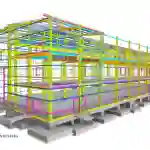
BIM architecture allows all disciplines to work within a shared model environment. Architectural elements are developed alongside structural and MEP systems, making it easier to identify conflicts early in the design stage. For example, clashes between beams and ceiling designs, or between facade elements and mechanical systems, can be detected and resolved digitally.
This level of coordination is particularly important in Dubai’s high rise buildings, where space constraints are tight and services must be carefully planned. BIM architecture helps ensure that architectural intent is maintained while accommodating structural and MEP requirements.
Clash detection and early problem solving
Clash detection is a key feature of BIM architecture that significantly improves coordination. By integrating architectural models with other disciplines, BIM software can automatically identify clashes and inconsistencies.
In Dubai, where construction costs are high and schedules are tight, resolving issues during construction is extremely expensive. BIM architecture shifts problem solving to the design phase, where changes are faster and more cost effective.
Architects can work closely with BIM specialists and consultants to review clash reports and adjust designs accordingly. This proactive approach reduces the risk of on site conflicts and helps keep projects on track.
Enhancing collaboration among project teams
Collaboration is at the heart of BIM architecture. Instead of working in silos, project teams collaborate through a shared digital model. This collaborative workflow is especially valuable in Dubai, where project teams often include local and international consultants.
BIM architecture improves communication by providing a clear visual representation of the design. Stakeholders can easily understand the project scope, identify potential issues, and provide informed feedback. This reduces misunderstandings and speeds up decision making.
For developers and clients in Dubai, BIM architecture offers greater transparency. They can review design options, understand spatial relationships, and make informed decisions early in the project lifecycle.
Supporting authority approvals and compliance
Dubai has specific building regulations and approval processes that must be followed. BIM architecture helps architects ensure compliance by integrating design data with regulatory requirements.
Detailed BIM models make it easier to demonstrate compliance with fire safety, accessibility, and sustainability standards. Authorities can review coordinated models rather than relying solely on 2D drawings, which can improve approval timelines.
In projects where approvals are time sensitive, this advantage can have a significant impact on overall project delivery.
Managing design changes efficiently
Design changes are common in Dubai projects, especially in high end developments where client preferences may evolve. Managing these changes in traditional workflows can be time consuming and error prone.
BIM architecture simplifies change management. Because all views are linked to a single model, changes made to one element are automatically updated throughout the design. This reduces the risk of inconsistencies and ensures that the latest information is always available.
For architects and consultants working in Dubai’s fast paced environment, this flexibility is invaluable. It allows teams to respond quickly to client requests without compromising design accuracy.
Improving construction documentation quality
High quality construction documentation is essential for successful project execution. BIM architecture improves the accuracy and consistency of drawings, schedules, and quantities.
In Dubai, where contractors rely on precise information to meet tight deadlines, this level of documentation quality is highly valued. BIM generated drawings are directly derived from the model, reducing the risk of discrepancies between design intent and construction documents.
Quantity takeoffs and material schedules can also be extracted directly from the model, supporting accurate cost estimation and procurement.
Role of BIM service providers in architectural coordination
While architects lead the design process, BIM service providers play a critical role in supporting BIM architecture workflows. In Dubai, many architectural firms collaborate with specialized BIM companies to manage modeling, coordination, and documentation.
Companies like BIM Connect support architects by providing detailed BIM models, coordination services, and clash detection. Their expertise helps ensure that architectural designs are accurately translated into coordinated digital models that align with other disciplines.
By working closely with architects and consultants, BIM service providers help maintain design integrity while improving overall coordination and efficiency.
BIM architecture and sustainability in Dubai
Sustainability is a key focus in Dubai’s development strategy. BIM architecture supports sustainable design by enabling performance analysis and material optimization.
Architects can use BIM models to analyze daylight, energy performance, and material usage. This helps design buildings that are more energy efficient and environmentally responsible.
In Dubai’s climate, where energy consumption is a major concern, BIM architecture provides valuable insights that support sustainable building solutions.
Future of BIM architecture in Dubai
The future of BIM architecture in Dubai looks strong. As the city continues to invest in smart buildings and digital transformation, BIM will play an even greater role in architectural design and coordination.
Technologies such as digital twins and cloud based collaboration platforms are expanding the capabilities of BIM architecture. These tools allow architects and stakeholders to interact with live building data, improving decision making throughout the building lifecycle.
Dubai’s commitment to innovation and quality ensures that BIM architecture will remain a core part of the construction industry.
Conclusion
BIM architecture has transformed the way buildings are designed and delivered in Dubai. By improving design accuracy and coordination, it helps architects and project teams manage complexity, reduce risks, and deliver high quality projects.
From early design stages to construction documentation and approvals, BIM architecture provides a reliable and collaborative framework that aligns with Dubai’s fast paced and ambitious construction environment. Improved coordination between disciplines, efficient change management, and enhanced visualization all contribute to better project outcomes.
As demand for complex and sustainable buildings continues to grow, BIM architecture will remain essential for Dubai’s construction industry. With the support of experienced BIM partners such as BIM Connect, architects and developers can confidently navigate design challenges and deliver projects that meet the highest standards of quality and performance.