


The Human Papillomavirus Vaccine Market has emerged as a critical segment within the global vaccine and preventive healthcare industry, owing to the increasing burden of HPV-related diseases and the growing emphasis on cancer prevention. Human papillomavirus (HPV) is one of the most prevalent sexually transmitted infections worldwide and is directly linked to multiple forms of cancer affecting both men and women. As awareness of HPV’s long-term health risks grows, vaccination has become a cornerstone strategy for reducing infection rates and associated malignancies.
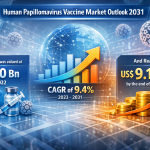
In 2022, the global human papillomavirus vaccine market was valued at US$ 4.0 Bn. With expanding immunization coverage, strong policy support, and continuous advancements in vaccine technology, the market is expected to grow at a CAGR of 9.4% from 2023 to 2031, reaching US$ 9.1 Bn by the end of the forecast period. This growth underscores the increasing prioritization of preventive healthcare across global healthcare systems.
Human Papillomavirus: Disease Burden and Clinical Impact
Human papillomavirus comprises more than 200 genetically related viruses, of which over 40 strains are transmitted through intimate skin-to-skin contact. While many HPV infections are asymptomatic and self-limiting, persistent infection with high-risk strains can lead to serious health outcomes, including cervical, anal, penile, vulvar, vaginal, and oropharyngeal cancers.
Cervical cancer remains the most prominent HPV-related malignancy, accounting for a significant proportion of HPV vaccine demand. Globally, cervical cancer continues to be one of the leading causes of cancer-related deaths among women, particularly in developing countries where screening and early detection remain limited. The substantial disease burden associated with HPV has positioned vaccination as a vital public health intervention.
Role and Effectiveness of HPV Vaccines
HPV vaccines are prophylactic vaccines designed to prevent infection from the most common cancer-causing and wart-causing HPV strains. These vaccines work by inducing the production of neutralizing antibodies that block the virus from entering host cells. Importantly, HPV vaccines are most effective when administered before exposure to the virus, which is why immunization programs primarily target adolescents and young adults.
The availability of bivalent, quadrivalent, and nonavalent vaccines has significantly expanded protection coverage. Nonavalent vaccines, in particular, protect against nine HPV types and account for the majority of HPV-related cancers, making them highly valuable in national immunization strategies.
Market Size Analysis and Growth Trajectory
The global human papillomavirus vaccine market has shown consistent expansion over recent years, supported by rising vaccine adoption and expanded age indications. From US$ 4.0 Bn in 2022, the market is projected to more than double by 2031, reflecting strong long-term demand.
This growth trajectory is driven by increasing public health expenditure, improved vaccine access, and integration of HPV vaccination into routine immunization schedules. As healthcare systems increasingly shift toward preventive models, the demand for HPV vaccines is expected to remain robust throughout the forecast period.
Key Market Drivers
Increasing Incidence of HPV-related Cancers
The rising incidence of HPV-related cancers is a major driver fueling market growth. HPV is responsible for nearly all cases of cervical cancer and a substantial proportion of anal and oropharyngeal cancers. According to global health estimates, a large percentage of sexually active individuals are exposed to HPV at some point in their lives, emphasizing the widespread nature of the infection.
In countries such as India, cervical cancer ranks among the most common cancers affecting women aged 15 to 44 years. The high prevalence of HPV-related diseases has intensified the focus on vaccination as a cost-effective and scalable preventive solution.
Strong Government Support and Policy Initiatives
Government-led vaccination initiatives play a crucial role in shaping the human papillomavirus vaccine market. Many countries have introduced publicly funded HPV immunization programs targeting adolescents, with some extending coverage to young adults. These programs significantly reduce out-of-pocket costs, improving vaccine accessibility and uptake.
Campaigns aimed at increasing awareness and addressing vaccine hesitancy have further strengthened market growth. Support from international organizations such as UNICEF and PAHO has also been instrumental in expanding vaccine distribution in low- and middle-income countries.
Expansion of Target Population
Traditionally, HPV vaccination programs focused primarily on adolescent girls. However, growing evidence supporting vaccination benefits for boys and older age groups has led to expanded recommendations in several regions. Inclusion of males not only reduces the transmission of HPV but also lowers the incidence of HPV-related cancers in men, thereby broadening the overall market scope.
Market Challenges and Limitations
Despite favorable growth prospects, the human papillomavirus vaccine market faces certain challenges. Vaccine hesitancy remains a persistent issue in some regions due to misinformation, cultural barriers, and concerns regarding vaccine safety. Additionally, disparities in healthcare infrastructure and limited access to vaccination services in rural and underserved areas hinder market penetration.
High manufacturing costs and complex cold-chain logistics also pose challenges, particularly in developing countries. Addressing these issues requires sustained investment in healthcare infrastructure, education, and public-private collaboration.
Opportunities for Market Expansion
Significant opportunities exist in the development of next-generation HPV vaccines. Pharmaceutical companies are actively exploring improved formulations that offer broader strain coverage, longer-lasting immunity, and simplified dosing schedules. Research into single-dose vaccines could be transformative, particularly for regions with limited healthcare resources.
Emerging markets present another major opportunity. Large populations, increasing healthcare investments, and rising awareness of cancer prevention in Asia Pacific, Latin America, and Africa are expected to create new avenues for market growth.
Segmentation Insights
By Valence
Based on valence, the market is segmented into bivalent, quadrivalent, and nonavalent vaccines. Nonavalent vaccines dominate the market due to their comprehensive protection against high-risk HPV strains associated with the majority of cervical and other HPV-related cancers. Their superior efficacy has led to widespread adoption in national immunization programs.
By Indication
The market is segmented by indication into cervical cancer, anal cancer, vaginal cancer, penile cancer, vulvar cancer, oropharyngeal cancer, genital warts, and others. Cervical cancer accounts for the largest share, but increasing recognition of HPV’s role in head and neck cancers is driving growth in the oropharyngeal cancer segment.
By Distribution Channel
Key distribution channels include physicians, wholesalers, physician distributors, government entities, and public-private alliances. Government entities account for a significant share due to centralized procurement and mass immunization programs, particularly in developed regions.
Regional Market Analysis
North America
North America remains the leading region in the global human papillomavirus vaccine market. High awareness levels, early adoption of vaccination programs, and strong regulatory support have driven widespread vaccine coverage. The U.S. and Canada continue to invest in vaccination and screening initiatives, sustaining regional market dominance.
Europe
Europe represents a mature market characterized by strong government funding and standardized immunization schedules. Several countries offer free or subsidized HPV vaccines, resulting in high vaccination rates among adolescents.
Asia Pacific
Asia Pacific is expected to witness the fastest growth during the forecast period. Increasing healthcare expenditure, rising awareness of cervical cancer prevention, and expanding government vaccination initiatives in countries such as China and India are key factors driving market growth.
Latin America and Middle East & Africa
These regions are gradually gaining traction due to improved access to vaccines through international funding programs and increasing focus on preventive healthcare. Although market penetration remains lower compared to developed regions, long-term growth potential is substantial.
Competitive Landscape
The human papillomavirus vaccine market is characterized by the presence of a limited number of global and regional players. Companies are focusing on research and development, strategic partnerships, and geographic expansion to strengthen their competitive positions.
Key players include Merck & Co., Inc., GlaxoSmithKline plc, Sanofi, AstraZeneca, Serum Institute of India Pvt. Ltd., Xiame Innovax Biotech Co., Ltd., General Incorporated Foundation, Chemo-Sero-Therapeutic Research Institute (Kaketsuken), and Bharat Biotech. These companies are actively involved in expanding production capacity and improving vaccine accessibility worldwide.
Recent Industry Developments
Recent developments highlight ongoing innovation and collaboration in the market. Expanded regulatory approvals for existing vaccines and partnerships focused on screening and early detection are reinforcing comprehensive HPV prevention strategies. Such initiatives are expected to positively influence vaccine adoption and market growth in the coming years.
Future Outlook
The outlook for the human papillomavirus vaccine market remains highly positive. Increasing global commitment to eliminating cervical cancer, expanding immunization coverage, and continued advancements in vaccine technology are expected to drive sustained market growth through 2031. As preventive healthcare gains prominence, HPV vaccines will play an increasingly vital role in reducing the global burden of cancer.