
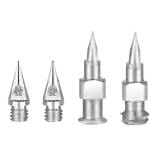




In industries where fluid control, micro-dispensing, and repeatable accuracy are critical, component design at the micron level determines overall system performance. Among these critical components, the Split Precision Needle has emerged as a highly specialized solution for applications that demand controlled flow separation, consistent dosing, and minimal tolerance deviation.
Unlike conventional solid needles, split precision needles are engineered to achieve controlled bifurcation, enhanced flow regulation, or specialized mechanical interaction at the tip or shaft. Manufacturers such as Contriu are increasingly focused on refining this niche yet essential component to support advanced medical, laboratory, and industrial processes.
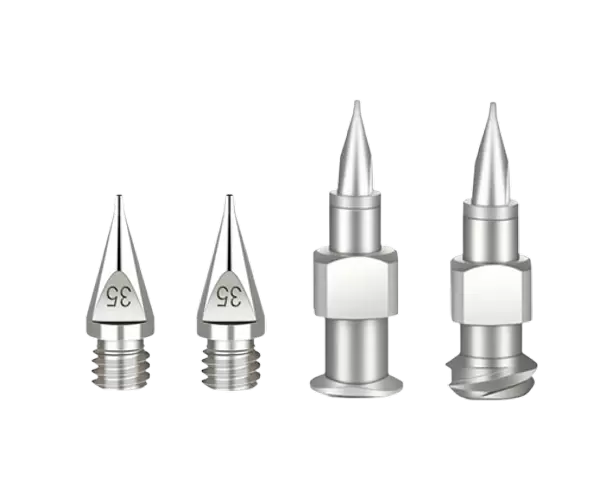
What Is a Split Precision Needle
A Split Precision Needle is a high-accuracy needle component featuring a longitudinal split, dual-channel structure, or engineered separation at the tip or shaft. This split design enables functional advantages that cannot be achieved with traditional single-channel needles.
Key structural characteristics include:
-
Precisely machined or laser-cut splits with micron-level tolerances
-
High concentricity and axial alignment
-
Controlled surface finish to manage fluid dynamics
-
Material uniformity to maintain mechanical stability
The “split” may serve different purposes depending on the application, such as dual fluid delivery, controlled expansion, improved penetration behavior, or enhanced flow consistency.
Engineering Advantages of Split Precision Needles
Controlled Fluid Dynamics
The split geometry allows for more predictable fluid behavior, particularly in micro-dosing and dual-channel delivery systems. This is essential in applications where uneven flow distribution could compromise accuracy or safety.
Enhanced Functional Versatility
Split precision needles can integrate multiple functions into a single component—such as delivery and sensing, or injection and aspiration—reducing system complexity.
Improved Repeatability
By carefully controlling split width and geometry, manufacturers can achieve high repeatability across production batches, ensuring consistent performance in automated systems.
Reduced Mechanical Stress
In certain applications, the split design helps distribute mechanical stress more evenly during insertion or operation, extending service life.
Contriu applies these engineering principles to ensure that each split precision needle meets both dimensional and functional requirements under real-world operating conditions.
Material Selection and Manufacturing Complexity
Producing split precision needles is significantly more complex than manufacturing standard needle components. Material selection plays a critical role in balancing strength, corrosion resistance, and manufacturability.
Common materials include:
-
Medical-grade stainless steel (e.g., 304, 316L)
-
Nickel-based alloys for chemical resistance
-
Specialty alloys for high-fatigue environments
Manufacturing challenges include:
-
Maintaining split uniformity along the needle length
-
Preventing micro-burrs or surface defects at the split edges
-
Preserving concentricity during secondary processing
-
Achieving consistent surface roughness to control flow
Advanced processes such as micro-CNC machining, laser cutting, precision grinding, and electro-polishing are often required. Contriu combines these processes with rigorous inspection protocols to ensure performance stability and compliance.
Application Areas Driving Demand
Medical and Pharmaceutical Devices
Split precision needles are widely used in drug delivery systems, diagnostic tools, and minimally invasive instruments where precise dosing and controlled fluid separation are essential.
Laboratory and Analytical Equipment
In chromatography, sample preparation, and microfluidic systems, split needles enable accurate handling of small-volume samples without cross-contamination.
Industrial Dispensing Systems
High-precision adhesives, lubricants, or chemical agents require controlled delivery, which split needle designs can optimize.
Specialized Automation Systems
Split precision needles support robotic and automated processes where repeatability and reliability are critical.
In these sectors, Contriu works closely with OEMs to tailor split needle designs to specific performance and regulatory requirements.
Precision, Tolerances, and Quality Control
The effectiveness of a split precision needle depends heavily on tolerance control. Even minor deviations in split width or alignment can affect performance.
Critical quality parameters include:
-
Split width tolerance
-
Tip geometry consistency
-
Surface roughness (Ra)
-
Straightness and concentricity
Advanced metrology tools—such as optical measurement systems and high-magnification inspection—are essential. Contriu emphasizes process stability and traceability, ensuring that each production batch meets defined specifications.
Conclusion: Precision Engineered for Critical Performance
The Split Precision Needle is not a commodity component—it is a precision-engineered solution that directly influences system accuracy, reliability, and safety. Through advanced design, material expertise, and strict quality control, manufacturers can unlock new levels of performance in fluid handling and micro-delivery systems.
By focusing on engineering-driven solutions and application-specific customization, Contriu supports customers in achieving reliable, high-precision outcomes across medical, laboratory, and industrial domains.