
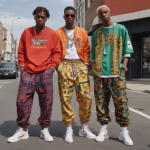






Hip-hop fashion didn't start on a runway. It started on the street, in neighborhoods where people were building a culture from the ground up with whatever they had access to. The way people dressed was part of that culture from the beginning, and what started as a local aesthetic in the Bronx in the 1970s eventually became one of the most influential forces in global fashion.
That's not an accident. It's the result of decades of creativity, community, and people choosing to represent their reality through what they wore.
Where It Started
The early hip-hop fashion influence came from necessity and creativity working together. Tracksuits, sneakers, gold chains, bucket hats, and Kangol caps were all part of the visual language because they were accessible and because the people wearing them made them mean something.
Run-DMC's partnership with Adidas in the mid-1980s is often cited as the moment hip-hop fashion influence entered the mainstream commercial conversation. But that partnership worked because the relationship was already real. Run-DMC was wearing Adidas because it was part of their culture, not because a marketing department told them to.
That authenticity is the foundation that everything built on top of it rests on.
The Decades of Evolution
Hip-hop fashion influence has gone through distinct phases, each one reflecting what was happening in the culture at the time.
The late 1980s and early 1990s brought oversized silhouettes, Timberland boots, baggy jeans, and athletic wear into the mainstream conversation. Labels like Karl Kani and FUBU emerged specifically to serve a community that mainstream fashion wasn't paying attention to. Those brands weren't just selling clothes. They were building economic infrastructure within a culture that had been largely excluded from the fashion industry.
The Luxury Turn
By the late 1990s and early 2000s, hip-hop artists were wearing luxury brands on stage and in music videos at a scale that those brands hadn't anticipated. Gucci, Louis Vuitton, and Versace found themselves embedded in a cultural conversation they hadn't chosen to enter. The hip-hop fashion influence was powerful enough to pull luxury down from its position of exclusivity and put it in dialogue with street culture.
That tension between luxury and street became one of the defining aesthetics of the era.
Streetwear as the Bridge
The evolution of streetwear in the 2000s and 2010s served as the bridge between hip-hop fashion influence and the broader culture. Labels like Supreme, Stüssy, and A Bathing Ape drew from skateboarding and hip-hop simultaneously, creating a visual language that was rooted in street culture but accessible across different communities.
Hip-hop artists were central to that bridge. When artists wore specific labels, those labels gained cultural currency that translated into commercial demand. The relationship between hip-hop and streetwear became mutually reinforcing.
Independent and city-based labels also found room in this moment. Brands rooted in specific cities, like BEL LLC in Baltimore, carry on the tradition of building fashion from within a community rather than at it. That model is a direct continuation of what FUBU and early hip-hop fashion pioneers were doing decades earlier.
The Cultural Mechanics of Hip-Hop Fashion
Understanding why hip-hop fashion influence has been so durable requires looking at the mechanics underneath the surface.
Hip-hop culture places high value on self-expression and authenticity. Clothing is part of that expression. The way someone dresses is a form of communication that operates before they say anything. That means fashion choices in hip-hop carry weight. They're statements.
When artists with large audiences make those statements, the statements travel. What started as a way of representing your neighborhood or your crew becomes a signal that millions of people interpret and adopt. That's the mechanism behind hip-hop fashion influence at its most basic level.
The Community Roots
Even at a global scale, hip-hop fashion influence stays connected to community roots. The cities that produce the most influential artists tend to produce distinctive fashion aesthetics too. Atlanta's fashion culture looks different from New York's, which looks different from Baltimore's or Chicago's.
That local specificity is part of what keeps hip-hop fashion interesting. It doesn't flatten into a single global aesthetic. It maintains regional identity even as it spreads.
Where Hip-Hop Fashion Is Now
Hip-hop fashion influence is now operating at a level where it shapes the direction of luxury fashion houses, major sportswear brands, and independent labels simultaneously. Designers who grew up in hip-hop culture are now running collections at some of the most prominent houses in fashion.
At the same time, independent labels rooted in specific cities and communities continue doing the foundational work. They're producing clothing that carries cultural identity without waiting for validation from the mainstream fashion industry.
This is the full circle that hip-hop fashion has traveled. From a self-sustaining culture building its own aesthetic out of necessity, to a global force that shapes the industry from the inside and continues to feed from the streets at the same time.
The stage was always just the most visible part. The street is where it lives.