The shift from passive surveillance to real-time visual intelligence is accelerating the global IP Camera Market.
Valued at USD 15.07 billion in 2024, the market is projected to reach USD 39.23 billion by 2032, expanding at a rapid CAGR of 12.7%, according to the latest strategic report by Maximize Market Research.
Key Market Drivers & Insights:
Hardware Dominance: Hardware solutions capture 76% of market revenue, propelled by demand for high-resolution optical sensors, ruggedized weather-pro... moreThe shift from passive surveillance to real-time visual intelligence is accelerating the global IP Camera Market.
Valued at USD 15.07 billion in 2024, the market is projected to reach USD 39.23 billion by 2032, expanding at a rapid CAGR of 12.7%, according to the latest strategic report by Maximize Market Research.
Key Market Drivers & Insights:
Hardware Dominance: Hardware solutions capture 76% of market revenue, propelled by demand for high-resolution optical sensors, ruggedized weather-proof enclosures, and edge AI processors.
Infrared & Night Vision Leadership: Infrared IP cameras lead product sales due to round-the-clock perimeter monitoring needs across high-security sites and urban intersections.
BFSI & Critical Infrastructure: The Banking and Financial Services sector commands the largest application expenditure, driven by strict fraud prevention mandates, automated threat alerts, and multi-branch surveillance upgrades.
Regional Landscape: Asia Pacific maintains the top market share through massive smart city investments and dense optical electronics manufacturing, while North America clocks the highest CAGR, spurred by NDAA compliance standards and enterprise cloud VSaaS migration.
As edge computing chips, 5G wireless connectivity, and low-light optical sensors mature, IP cameras are evolving from basic security recorders into predictive, business-critical visual AI nodes.
DDoS Mitigation Tools in 2026: Top Vendors, Enterprise Protection, AI Detection, and Platform Comparison
Distributed Denial-of-Service (DDoS) attacks remain a major cybersecurity challenge for organizations operating websites, cloud applications, digital services, and critical infrastructure. As attackers develop more sophisticated techniques and enterprises adopt cloud, hybrid, and distributed environments, traditional DDoS protection is being challenged. The market is shifting toward scalable... moreDDoS Mitigation Tools in 2026: Top Vendors, Enterprise Protection, AI Detection, and Platform Comparison
Distributed Denial-of-Service (DDoS) attacks remain a major cybersecurity challenge for organizations operating websites, cloud applications, digital services, and critical infrastructure. As attackers develop more sophisticated techniques and enterprises adopt cloud, hybrid, and distributed environments, traditional DDoS protection is being challenged. The market is shifting toward scalable, intelligent, and automated platforms that can detect attacks in real time, mitigate malicious traffic, and maintain service availability.
A Distributed Denial-of-Service (DDoS) attack attempts to overwhelm a website, application, server, or network with malicious traffic or requests, making services unavailable to legitimate users. Attacks may target network, protocol, or application layers and can use multiple attack vectors. Effective DDoS protection is therefore essential for cybersecurity, business continuity, and digital resilience.
Why Modern DDoS Protection Matters
As organizations move to cloud, multi-cloud, and hybrid environments, legacy hardware-based protection may lack the scalability and flexibility required by modern infrastructure. The migration away from legacy hardware is becoming important for organizations seeking future-ready security.
Modern platforms should scale dynamically, provide automated mitigation, and respond rapidly to changing attack patterns. Organizations should assess whether their DDoS architecture can protect against future threats as well as current attacks.
Which Is the Best DDoS Mitigation Solution?
There is no universal best DDoS mitigation solution. The right platform depends on network architecture, application environment, traffic patterns, geographic presence, and business requirements.
When comparing solutions, organizations should consider real-time detection, mitigation speed, network and application-layer protection, cloud and hybrid deployment, scalability, AI capabilities, automation, global mitigation capacity, traffic visibility, integration, and total cost of ownership.
The best DDoS protection platform should balance security, scalability, performance, operational simplicity, and long-term value.
The market includes cybersecurity providers, network security specialists, cloud-based protection providers, and vendors offering integrated DDoS and application security.
Organizations evaluating top DDoS mitigation vendors should assess detection accuracy, mitigation speed, network capacity, application protection, threat intelligence, automation, AI capabilities, deployment flexibility, and support. Because vendors have different strengths, identifying DDoS market leaders should depend on specific organizational needs.
How Do I Compare DDoS Mitigation Vendors?
A structured DDoS vendor evaluation should examine detection speed, mitigation effectiveness, scalability, deployment architecture, automation, AI capabilities, application protection, visibility, integration, and total cost.
Organizations should ask how quickly a vendor detects attacks, separates malicious traffic from legitimate users, automates mitigation, and scales as infrastructure and threats evolve.
Radware vs. NETSCOUT Arbor
Radware vs. NETSCOUT Arbor is a common comparison when evaluating specialized DDoS protection. Buyers should compare detection, mitigation architecture, network protection, application security, automation, analytics, deployment options, and operational requirements.
Artificial intelligence and machine learning are increasingly influencing DDoS mitigation. AI can analyze traffic patterns, identify anomalies, detect behavioral changes, and support faster responses.
AI capabilities can improve anomaly detection, traffic classification, behavioral analysis, predictive threat identification, automated mitigation, false-positive reduction, threat intelligence, and incident investigation.
Organizations should evaluate AI based on measurable improvements in detection accuracy, response speed, and security-team efficiency.
DDoS Mitigation Market Trends
Key trends include the migration from legacy hardware, cloud-based protection, AI and automation, multi-vector defense, real-time visibility, and hybrid security architectures. Organizations increasingly require flexible protection across data centers, cloud environments, applications, and distributed networks.
DDoS Mitigation Tools in 2026: Top Vendors, Enterprise Protection, AI Detection, and Vendor Comparison
Distributed Denial-of-Service (DDoS) attacks continue to be a major cybersecurity challenge for organizations operating digital services, cloud applications, online platforms, and critical infrastructure. As attackers develop more sophisticated techniques and organizations migrate workloads from traditional data centers to hybrid and cloud environments, legacy DDoS protection architectures are... moreDDoS Mitigation Tools in 2026: Top Vendors, Enterprise Protection, AI Detection, and Vendor Comparison
Distributed Denial-of-Service (DDoS) attacks continue to be a major cybersecurity challenge for organizations operating digital services, cloud applications, online platforms, and critical infrastructure. As attackers develop more sophisticated techniques and organizations migrate workloads from traditional data centers to hybrid and cloud environments, legacy DDoS protection architectures are increasingly being challenged.
The DDoS mitigation market is therefore moving toward scalable, intelligent, and automated protection platforms that can detect attacks in real time, absorb large-scale traffic floods, and protect applications and networks without disrupting legitimate users. QKS Group's market research on DDoS mitigation tools, along with its analysis of the migration away from legacy hardware and the changing nature of modern attacks, highlights the importance of choosing a platform designed for today's threat environment rather than yesterday's attack patterns.
For enterprises evaluating the top DDoS mitigation vendors, the decision is no longer based only on mitigation capacity. Organizations must also assess detection accuracy, response speed, cloud scalability, automation, AI capabilities, deployment flexibility, global coverage, and the ability to protect increasingly distributed digital infrastructure.
A Distributed Denial-of-Service (DDoS) attack is a cyberattack in which an attacker attempts to overwhelm a website, application, network, server, or online service with a large volume of malicious traffic or requests. The objective is to consume available resources and prevent legitimate users from accessing the targeted service.
DDoS attacks can take several forms, including volumetric attacks, protocol-based attacks, and application-layer attacks. Modern campaigns may also combine multiple attack vectors, making detection and mitigation more difficult.
For businesses that depend on digital availability, DDoS protection is a critical component of cybersecurity and business resilience. An effective DDoS mitigation solution must identify malicious traffic quickly, separate it from legitimate traffic, and mitigate attacks without creating unacceptable latency or service disruption.
Why Traditional DDoS Protection Is No Longer Enough
The evolution of DDoS attacks is creating new challenges for organizations relying on legacy hardware-based protection. Traditional appliances may provide valuable protection within specific network environments, but modern enterprises increasingly operate across cloud, hybrid, multi-cloud, and distributed architectures.
The migration away from legacy hardware is therefore becoming an important consideration for mid-market and enterprise organizations. Modern platforms need to scale dynamically as traffic volumes and attack patterns change.
According to QKS Group's analysis of the DDoS defense landscape, organizations should consider whether their protection architecture can support future requirements rather than simply addressing current threats. Scalable cloud-based and hybrid approaches can provide greater flexibility, while intelligent automation can reduce the time required to identify and respond to attacks.
Which Is the Best DDoS Mitigation Solution?
There is no single DDoS mitigation solution that is universally best for every organization. The right platform depends on the organization's network architecture, application environment, traffic profile, geographic footprint, risk tolerance, and business continuity requirements.
When selecting a DDoS mitigation platform, organizations should evaluate:
Real-time attack detection and mitigation
Network and application-layer protection
Cloud and hybrid deployment options
Scalability during large attacks
AI and machine-learning capabilities
Automation and response speed
Global scrubbing capacity
Traffic analysis and visibility
Integration with existing security infrastructure
Protection against evolving attack techniques
The best DDoS protection platform is ultimately the one that provides the right balance of security effectiveness, scalability, performance, operational simplicity, and total cost of ownership.
The DDoS mitigation market includes established cybersecurity providers, network security specialists, cloud-based protection providers, and technology vendors that combine DDoS defense with broader application and network security capabilities.
Organizations evaluating top DDoS mitigation providers should look beyond brand recognition and compare vendors based on measurable capabilities. Important areas include attack detection accuracy, mitigation speed, network capacity, application protection, threat intelligence, automation, AI capabilities, deployment flexibility, and customer support.
The competitive landscape also includes vendors with different strengths. Some focus heavily on network-level DDoS mitigation, while others emphasize application protection, cloud-native security, or integrated security services.
This means that the question of which DDoS mitigation vendor is a market leader should be answered in the context of the organization's specific requirements rather than based on a single universal ranking.
Which DDoS Protection Platform Is Best for Enterprises?
Enterprise organizations typically require DDoS protection that can support large-scale, geographically distributed environments while maintaining business continuity during attacks.
The most important enterprise capabilities include high mitigation capacity, global traffic scrubbing, rapid detection, low-latency protection, hybrid deployment support, application-layer defense, centralized visibility, and integration with security operations.
Enterprises should also consider whether the platform can protect multiple environments, including data centers, public clouds, private clouds, APIs, websites, and mission-critical applications.
Scalability is particularly important. A platform that performs well under normal traffic conditions must also be capable of handling sudden traffic spikes caused by large-scale attacks.
How Do I Compare DDoS Mitigation Vendors?
A structured DDoS vendor evaluation should consider both technical performance and business requirements.
Organizations can compare vendors across the following criteria:
Detection: How quickly can the platform identify an attack?
Mitigation: How effectively can it block malicious traffic while allowing legitimate traffic to continue?
Scalability: Can the solution handle increasingly large and sophisticated attacks?
Architecture: Does the vendor support cloud, on-premises, hybrid, or multi-cloud deployments?
Automation: Can mitigation actions be initiated automatically?
AI and Analytics: Does the platform use advanced analytics, machine learning, or AI-based threat detection?
Application Protection: Can the solution defend against application-layer attacks as well as volumetric attacks?
Visibility: Does the platform provide real-time dashboards, traffic intelligence, and detailed attack reporting?
Integration: Can it integrate with existing security operations, network infrastructure, and incident response workflows?
Total Cost of Ownership: Does the solution provide long-term value as the organization's infrastructure and threat exposure grow?
A comprehensive comparison should evaluate these factors together rather than relying on DDoS software reviews or individual feature comparisons.
Which Vendor Offers the Best DDoS Protection?
The vendor offering the best DDoS protection depends on the organization's priorities.
For a global enterprise, network capacity and geographic coverage may be critical. For a cloud-native organization, cloud integration and elastic scalability may be more important. For a mid-market enterprise migrating away from legacy hardware, deployment flexibility and predictable operating costs may be decisive.
Organizations should therefore identify their most important requirements before selecting a vendor.
The best DDoS protection provider is the one capable of delivering reliable mitigation while aligning with the organization's infrastructure, operational model, and future security strategy.
Radware and NETSCOUT Arbor are frequently considered when organizations evaluate specialized DDoS protection capabilities.
A Radware vs. NETSCOUT Arbor comparison should consider areas such as attack detection, mitigation architecture, network protection, application security, automation, analytics, deployment options, and operational requirements.
Rather than declaring one vendor universally superior, organizations should assess how each platform aligns with their specific environment. Enterprises with complex hybrid infrastructures may prioritize different capabilities than organizations focused primarily on application-layer protection or large-scale network defense.
A meaningful vendor comparison should therefore examine product architecture, use cases, technology maturity, customer impact, scalability, and long-term strategic fit.
Which DDoS Solution Supports AI-Based Threat Detection?
Artificial intelligence and machine learning are increasingly influencing the DDoS mitigation market.
AI-based technologies can analyze traffic patterns, identify anomalies, detect deviations from normal behavior, and support faster response to evolving threats. This is particularly valuable as attackers increasingly use sophisticated and multi-vector techniques.
However, organizations should evaluate AI capabilities based on measurable outcomes rather than marketing claims. The important question is how effectively AI improves detection accuracy, mitigation speed, and operational efficiency.
Which DDoS Platform Provides Real-Time Attack Mitigation?
Real-time attack mitigation is a fundamental requirement for modern DDoS defense.
An effective platform should continuously monitor traffic, detect abnormal activity, and initiate mitigation with minimal delay. Automated response is especially important because DDoS attacks can escalate rapidly.
Modern solutions increasingly combine real-time monitoring with automated traffic analysis and intelligent mitigation. This approach enables organizations to respond to attacks faster while reducing the burden on security teams.
For enterprises, real-time protection should also be combined with detailed visibility and reporting so that security teams can understand the nature, source, and impact of an attack.
How Are DDoS Mitigation Vendors Evaluated?
Analyst research provides a structured approach to comparing DDoS mitigation vendors.
QKS Group's research methodology combines quantitative and qualitative inputs, including market sizing, capability scoring, vendor strategy, product innovation, customer pain points, technology maturity, and customer impact. Its Closed-Loop Research methodology is designed to connect technology trends, market maturity, innovation, and customer outcomes.
For buyers, this type of analysis can provide a broader perspective than individual product specifications. It helps organizations understand how vendors are positioned within the market and how their capabilities align with evolving customer requirements.
Which Analyst Report Compares DDoS Mitigation Vendors?
Organizations looking for an analyst perspective on the DDoS mitigation market can use QKS Group's market research covering DDoS Mitigation Tools, including market-share and market-forecast research.
The market forecast research provides a forward-looking view of the DDoS mitigation tools market, while market-share research helps organizations understand the competitive landscape. Together with QKS Group's industry-focused review content, these resources can support organizations conducting DDoS vendor evaluation and DDoS mitigation platform reviews.
DDoS Mitigation Market Outlook
The DDoS mitigation market is evolving as enterprises modernize their infrastructure and attackers develop increasingly sophisticated techniques.
Key trends shaping the market include:
Migration from Legacy Hardware: Organizations are increasingly evaluating scalable alternatives to fixed-capacity appliances.
Cloud-Based Protection: Cloud-based mitigation can provide greater flexibility and scalability for distributed environments.
AI and Automation: Intelligent analytics and automated mitigation are becoming increasingly important for faster threat response.
Multi-Vector Protection: Organizations require defense against network, protocol, and application-layer attacks.
Real-Time Visibility: Security teams increasingly expect continuous monitoring and actionable attack intelligence.
Hybrid Security Architectures: Enterprises need protection across data centers, cloud environments, applications, and distributed networks.
The QKS Group market forecast research reflects the continued evolution of the DDoS mitigation tools landscape through 2030, highlighting the importance of scalable and future-ready protection strategies.
Compare DDoS Protection Solutions: A Practical Framework
Organizations comparing DDoS protection solutions should begin by defining their current and future risk profile. A practical evaluation framework should examine attack types, network architecture, application dependencies, expected traffic growth, compliance requirements, and business continuity objectives.
From there, organizations can compare vendors based on mitigation capacity, detection speed, AI capabilities, automation, cloud scalability, application protection, integration, reporting, and total cost of ownership.
The goal should not simply be to find the platform with the largest number of features. Instead, organizations should identify the solution that provides effective protection against the threats they face today while remaining scalable enough to address tomorrow's attack landscape.
Conclusion
DDoS attacks are becoming more sophisticated, while enterprise infrastructure is becoming more distributed. This combination is forcing organizations to rethink traditional approaches to DDoS protection.
The move away from legacy hardware, the growing adoption of cloud and hybrid architectures, and the emergence of AI-driven threat detection are reshaping the DDoS mitigation market. Organizations evaluating top DDoS mitigation vendors should therefore consider more than basic attack mitigation capacity.
The right DDoS protection platform should provide real-time detection, rapid mitigation, scalable architecture, intelligent automation, and comprehensive visibility. It should also align with the organization's broader cybersecurity and business resilience strategy.
For organizations conducting DDoS software reviews, DDoS vendor evaluation, or DDoS mitigation platform reviews, QKS Group's market-share and forecast research, together with its analysis of emerging DDoS defense trends, provides a useful foundation for understanding the competitive landscape and making informed technology decisions.
Thanks for sharing this guide. I like how thehttps://vipapk.com.pk/666ep-game/ earning details are explained without making the process confusing for beginners.
The Ultimate Guide to Governance, Risk & Compliance (GRC) Platforms: Top Vendors, AI, and Industry Insights for 2026
Organizations today face an increasingly complex business environment where regulatory requirements, cybersecurity threats, third-party risks, and environmental, social, and governance (ESG) obligations continue to evolve. As enterprises accelerate digital transformation, traditional compliance processes and disconnected risk management tools are no longer sufficient. Businesses ... moreThe Ultimate Guide to Governance, Risk & Compliance (GRC) Platforms: Top Vendors, AI, and Industry Insights for 2026
Organizations today face an increasingly complex business environment where regulatory requirements, cybersecurity threats, third-party risks, and environmental, social, and governance (ESG) obligations continue to evolve. As enterprises accelerate digital transformation, traditional compliance processes and disconnected risk management tools are no longer sufficient. Businesses need integrated platforms that provide visibility into risks, automate compliance, and enable informed decision-making.
This shift has positioned Governance, Risk, and Compliance (GRC) platforms as strategic business solutions rather than simply compliance management tools. Modern GRC platforms help organizations establish effective governance frameworks, proactively identify and assess risks, automate regulatory compliance, and strengthen operational resilience.
The Spark Matrix™: Governance, Risk & Compliance Platforms, Q1 2026 by QKS Group offers a comprehensive evaluation of leading GRC vendors based on Technology Excellence and Customer Impact. Alongside broader market research, the report provides valuable insights into how the GRC landscape is evolving, the technologies shaping the market, and the factors organizations should consider when selecting a platform.
What is a Governance, Risk, and Compliance (GRC) Platform?
A Governance, Risk, and Compliance (GRC) platform is an integrated software solution that enables organizations to manage governance processes, identify and mitigate enterprise risks, and ensure compliance with internal policies and external regulations.
Rather than operating separate systems for audit management, policy administration, regulatory compliance, cybersecurity, and third-party risk management, organizations can consolidate these capabilities into a unified platform.
A modern GRC platform typically includes:
• Enterprise Risk Management (ERM)
• Regulatory Compliance Management
• Internal Audit Management
• Policy and Document Management
• Third-Party Risk Management
• Operational Risk Management
• IT Risk and Cyber Risk Management
• ESG and Sustainability Governance
• Business Continuity Management
• Incident and Issue Management
By integrating these functions, organizations gain greater visibility into enterprise risks while reducing manual processes and improving decision-making.
Why Are GRC Platforms Becoming Business-Critical?
Historically, GRC initiatives focused primarily on regulatory compliance and audit readiness. However, today's business environment demands much more.
Organizations now manage increasingly complex ecosystems involving cloud infrastructure, remote workforces, global suppliers, AI governance requirements, and rapidly changing regulations.
As highlighted across QKS Group's market research, leading GRC vendors are evolving their platforms beyond compliance to become enterprise decision-support systems that connect operational, financial, cyber, and strategic risks.
Instead of merely documenting risks, organizations increasingly expect GRC platforms to:
This transformation is redefining GRC as a business performance enabler rather than a regulatory obligation.
GRC vs. Integrated Risk Management (IRM)
Many organizations ask:
What is the difference between GRC and IRM?
Although the terms are often used interchangeably, they represent different approaches.
Governance, Risk, and Compliance (GRC) focuses on establishing governance structures, maintaining regulatory compliance, and managing enterprise risks through standardized processes and controls.
Integrated Risk Management (IRM) extends these capabilities by connecting risk management directly with business strategy, operational performance, cybersecurity, digital transformation initiatives, and organizational resilience.
While GRC emphasizes governance and compliance, IRM encourages continuous risk-informed decision-making across the enterprise.
Most leading GRC vendors now incorporate IRM capabilities within their platforms, reflecting the market's shift toward holistic risk management.
The GRC software market continues to experience significant growth due to several converging factors.
Increasing Regulatory Complexity
Organizations must comply with an expanding number of regional and industry-specific regulations involving data privacy, cybersecurity, ESG reporting, financial governance, operational resilience, and supply chain risk.
Manual compliance processes are becoming increasingly expensive and difficult to maintain.
Rising Cybersecurity Risks
Cybersecurity has become a board-level priority.
Organizations now recognize that cyber risks directly affect financial performance, operational continuity, customer trust, and regulatory exposure.
As a result, cyber risk management is increasingly integrated into enterprise GRC strategies.
Digital Transformation
Cloud adoption, hybrid work environments, AI deployment, and digital business models have significantly expanded organizational risk landscapes.
Businesses require centralized visibility across operational, IT, financial, compliance, and third-party risks.
Executive-Level Risk Visibility
Executives and boards increasingly demand measurable, real-time insights into organizational risk exposure.
Modern GRC platforms provide dashboards, analytics, and predictive reporting that support strategic decision-making.
Top Governance, Risk, and Compliance Vendors
The GRC market consists of established enterprise software providers alongside innovative vendors delivering AI-powered risk intelligence, automation, and industry-specific capabilities.
Leading vendors evaluated within the market typically compete across areas such as:
Rather than focusing solely on compliance functionality, organizations increasingly evaluate vendors based on scalability, automation capabilities, analytics, integration ecosystems, deployment flexibility, and user experience.
The Spark Matrix™ provides an independent framework for comparing vendors across these dimensions, helping organizations identify solutions aligned with their business requirements.
Governance, Risk, and Compliance Software Comparison
Selecting a GRC platform requires evaluating multiple functional and strategic capabilities.
Important comparison criteria include:
When comparing Governance, Risk, and Compliance (GRC) platforms, organizations should evaluate capabilities such as risk management, compliance automation, AI-driven analytics, third-party risk management, audit management, ESG support, reporting, workflow automation, integration, and scalability. These features help businesses identify and mitigate risks, streamline compliance, improve decision-making, and enhance operational efficiency. Seamless integration with enterprise systems and the ability to scale with business growth are equally important. Choosing a GRC platform that aligns with current business needs while supporting future digital transformation ensures long-term value, strengthens governance, and enables organizations to effectively manage evolving regulatory and operational challenges.
Organizations should prioritize platforms that align with current operational needs while supporting future digital transformation initiatives.
Large enterprises typically require platforms capable of managing thousands of users, multiple business units, complex regulatory environments, and global operations.
Automation reduces administrative workload while improving consistency and audit readiness.
Organizations should evaluate how extensively vendors automate repetitive compliance activities rather than simply digitizing manual processes.
How Will AI Affect the GRC Market?
Artificial intelligence is rapidly transforming Governance, Risk, and Compliance platforms.
Rather than replacing compliance professionals, AI enables teams to focus on higher-value strategic activities.
Key AI applications include:
Intelligent Risk Identification
AI analyzes large datasets to detect emerging risks earlier than traditional approaches.
Predictive Risk Analytics
Machine learning models forecast potential operational, cyber, financial, and compliance risks before they materialize.
Automated Compliance Monitoring
AI continuously evaluates regulatory requirements and identifies potential compliance gaps.
Intelligent Reporting
Generative AI assists in preparing audit reports, executive summaries, and compliance documentation.
Risk Prioritization
AI helps organizations focus resources on the most critical business risks by evaluating likelihood, financial impact, and operational significance.
As AI governance regulations evolve, organizations are also using GRC platforms to establish responsible AI oversight frameworks.
Latest GRC Market Trends
Several trends continue to reshape the Governance, Risk, and Compliance market.
AI-Powered Decision Intelligence
Organizations increasingly expect GRC platforms to deliver predictive insights rather than historical reporting.
Cyber Risk Quantification
Businesses seek financial measurements of cyber risk to improve executive decision-making and justify security investments.
ESG Integration
Environmental, social, and governance reporting is becoming a core component of enterprise governance strategies.
Continuous Compliance
Instead of periodic assessments, organizations are moving toward continuous compliance monitoring supported by automation.
Operational Resilience
Organizations are expanding GRC initiatives to include business continuity, resilience planning, and crisis response.
Unified Risk Platforms
Enterprises increasingly prefer integrated platforms that consolidate operational, cyber, financial, compliance, and third-party risks into a single environment.
• Organization size
• Industry regulations
• Geographic presence
• Digital maturity
• Existing technology ecosystem
• Risk management priorities
• Compliance requirements
• Budget
• AI and automation expectations
Organizations should evaluate vendors based on strategic fit rather than feature count alone.
Analyst evaluations such as the Spark Matrix™ can provide structured comparisons that help decision-makers assess technology maturity, customer impact, innovation, and long-term market direction.
Frequently Asked Questions
What is Governance, Risk, and Compliance (GRC)?
GRC is a business framework that helps organizations establish governance processes, manage enterprise risks, and comply with regulatory requirements using integrated policies, controls, and technologies.
Which are the leading GRC vendors?
The GRC market includes several global technology providers offering enterprise-scale governance, risk, compliance, audit, cyber risk, and operational resilience capabilities. Analyst evaluations such as the Spark Matrix™ compare vendors based on technology innovation and customer impact.
Which GRC platforms use artificial intelligence?
Many modern GRC platforms incorporate AI to automate compliance workflows, identify emerging risks, support predictive analytics, improve reporting, and enhance executive decision-making.
Which GRC platform offers the best compliance automation?
Organizations should evaluate platforms based on automated control testing, evidence collection, regulatory monitoring, workflow automation, audit readiness, and AI-assisted compliance management.
Governance, Risk, and Compliance has evolved far beyond regulatory reporting. Today's GRC platforms enable organizations to manage enterprise-wide risks, automate compliance processes, strengthen operational resilience, and support strategic decision-making through advanced analytics and artificial intelligence.
As organizations navigate increasing regulatory complexity, cyber threats, ESG requirements, and digital transformation initiatives, selecting the right GRC platform becomes a strategic investment rather than a technology purchase.
The Spark Matrix™: Governance, Risk & Compliance Platforms, Q1 2026 provides organizations with a structured framework for evaluating leading GRC vendors based on technology capabilities, innovation, and customer impact. Combined with broader market insights, it helps business and technology leaders identify solutions that align with their governance objectives, risk management priorities, and long-term digital transformation strategies.
Risk-Based Authentication Solutions Market Analysis: SPARK Matrix Evaluation of Leading Vendors
Risk-Based Authentication (RBA) market is witnessing significant growth as organizations increasingly prioritize advanced security mechanisms to mitigate fraud, account takeovers, and other cyber threats. RBA solutions enable businesses to evaluate the risk associated with each authentication attempt in real time, adjusting security measures based on contextual factors such as device, location, user ... moreRisk-Based Authentication Solutions Market Analysis: SPARK Matrix Evaluation of Leading Vendors
Risk-Based Authentication (RBA) market is witnessing significant growth as organizations increasingly prioritize advanced security mechanisms to mitigate fraud, account takeovers, and other cyber threats. RBA solutions enable businesses to evaluate the risk associated with each authentication attempt in real time, adjusting security measures based on contextual factors such as device, location, user behavior, and transaction type. This dynamic approach offers a more intelligent and user-friendly alternative to traditional static authentication methods.
Market research on Risk-Based Authentication provides a comprehensive understanding of both short-term and long-term growth opportunities, emerging market trends, and future market outlook. It serves as a strategic guide for technology vendors, helping them align their offerings with evolving customer requirements, while also assisting end-users in evaluating different vendors’ capabilities, competitive differentiation, and overall market positioning.
A key feature of this research is the SPARK Matrix analysis, which evaluates leading RBA vendors based on their technology excellence and market impact. Notable vendors assessed include Accops, Appgate, BPC, Broadcom, CoffeeBean Technology, CyberArk, Duo Security (Cisco), IBM, Kount, LexisNexis Risk Solutions, LoginRadius, Microsoft, Okta, OneLogin, OneSpan, Ping Identity, Prove, RSA Security, SecureAuth, Silverfort, Swivel Secure, and TransUnion. The SPARK Matrix provides a clear comparative view, helping enterprises identify providers with advanced capabilities and global influence.
Modern RBA solutions go beyond simple authentication checks, incorporating advanced technologies such as AI- and machine learning-powered risk and fraud models. These systems can detect anomalies and suspicious behavior patterns in real time, protecting against payment fraud, bot attacks, phishing, and account takeover attempts. Additional innovative features offered by leading vendors include passwordless authentication, orchestration engines, behavioral analytics, human GAIT model authentication, end-to-end fraud strategy, and consolidation of risk intelligence. Such functionalities collectively strengthen an organization’s cybersecurity posture, allowing proactive threat detection and mitigation.
The growing adoption of digital services, e-commerce platforms, and mobile banking has accelerated demand for RBA solutions globally. Enterprises are recognizing the need for intelligent authentication methods that balance security with seamless user experience. Risk-Based Authentication addresses this challenge by providing adaptive security measures that dynamically respond to evolving threats without introducing friction for legitimate users.
Looking forward, the RBA market is expected to witness continuous innovation and increased vendor competition, driving the development of more sophisticated, AI-driven, and behaviorally-aware authentication models. Vendors that invest in integrated fraud intelligence, orchestration capabilities, and machine learning enhancements are likely to capture larger market share. Meanwhile, organizations deploying RBA solutions can benefit from reduced fraud losses, improved compliance, and enhanced customer trust.
In conclusion, the Risk-Based Authentication market represents a critical frontier in cybersecurity. With evolving threats and increasingly sophisticated attack vectors, RBA solutions empower organizations to protect digital identities while ensuring a seamless user experience. Strategic insights from SPARK Matrix evaluations enable both vendors and users to navigate this complex landscape, fostering informed decisions and long-term growth in the global cybersecurity ecosystem.
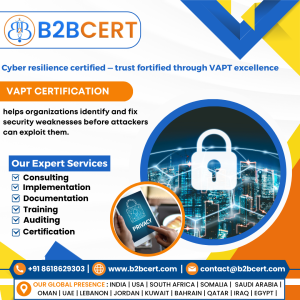
In today's digital landscape, cyber threats are becoming increasingly sophisticated, making it essential for organizations to identify and address security weaknesses before attackers can exploit...
Posted by rashi on September 14 2026 at 03:56 PM
public
AI has emerged as a game-changer in the world of cybersecurity, making cybersecurity an exciting subject for many professionals today. As hackers use more sophisticated tools to attack networks, ...
Defence Cybersecurity Market: Growth, Trends, Demand & Forecast to 2033
Defence Cybersecurity Market Overview
The Defence Cybersecurity Market is entering a period of strong expansion as de...
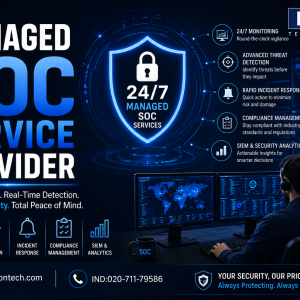
Can Managed SOC Service Providers Keep Indian Retail Secure Around the Clock?
Retail businesses increasingly depend on digital systems to keep everyday operations moving. Online storefronts, pay...
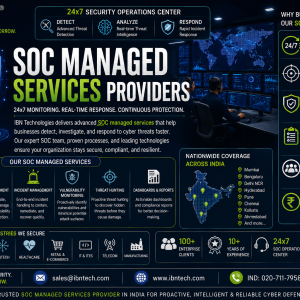
The IT Security Advantage: How soc managed services providers Change Threat Response
Indian IT businesses operate in environments where cloud platforms, business applications, employee endpoints...