Chassis welding is the joining of frames and load-bearing structures for trucks, trailers, buses, agricultural machines and construction equipment. The parts are long, the welds carry heavy...
Chassis Welding: Methods, Quality Control And Automation
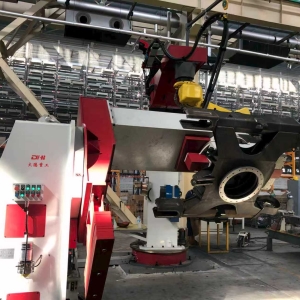
Chassis welding is the joining of frames and load-bearing structures for trucks, trailers, buses, agricultural machines and construction equipment. The parts are long, the welds carry heavy service loads, and distortion is a constant fight. This article explains the welding methods used on chassis, how quality is controlled, and where automation pays off.
What Chassis Welding Covers
Chassis work includes side rails, cross membe... moreChassis Welding: Methods, Quality Control And Automation
Chassis welding is the joining of frames and load-bearing structures for trucks, trailers, buses, agricultural machines and construction equipment. The parts are long, the welds carry heavy service loads, and distortion is a constant fight. This article explains the welding methods used on chassis, how quality is controlled, and where automation pays off.
What Chassis Welding Covers
Chassis work includes side rails, cross members, brackets, suspension mounts, axle housings and cab frames. Materials are mostly carbon steel and high-strength low-alloy steel, with aluminum growing in trailers, buses and electric vehicles. Plate and tube thickness typically runs from 2 mm to 15 mm. The joints are mostly fillet welds, with some butt welds on rails and plug welds on closed sections.
Every weld on a chassis is a structural weld. A crack in a bracket weld can become a fatigue failure in service, which is why weld quality on chassis is treated with more care than on non-structural fabrication.
Main Welding Methods for Chassis
MIG/MAG welding. The default for steel chassis. Solid wire with CO2 or an argon-CO2 mix gives good penetration and speed. It handles the long fillet welds on rails and brackets well.
Flux-cored arc welding. Higher deposition for thicker sections, and more tolerant of drafts outdoors. Common in heavy truck and construction machinery frames.
Robotic MIG welding. The standard for high-volume frames. Robots hold torch angle and speed constant, which fillet welds on long rails need.
Laser welding. Used on aluminum chassis and battery trays in electric vehicles. Low heat input means less distortion, and the narrow weld suits thin sections.
Resistance spot welding. Used for body-in-white and cab assembly rather than frames, but worth noting because chassis shops often handle cabs too.
The Distortion Problem
Long, thin chassis members warp when heat input is uneven. A single long fillet on one side of a rail can bow the whole member. Control comes from several directions at once:
Rigid fixtures and clamps that hold the part against the heat.
Weld sequence planning: alternating sides, back-stepping, or welding both sides of a joint in turn so shrinkage cancels out.
Lower heat input processes, including pulsed MIG and laser, which put less energy into the part.
Compensation built into the fixture, such as pre-setting the part to the expected distortion.
A chassis welding fixture does three jobs: it locates the parts, holds them during welding, and prevents the weld shrinkage from pulling the assembly out of tolerance. Design points that matter: stable datum points that every fixture references, clamp force high enough to hold but not crush thin tube, copper or steel backing bars under critical welds to cool the pool, and quick-release clamps so cycle time does not disappear in loading and unloading.
On production lines, the fixture usually travels with the part from station to station, keeping the same datum through the whole welding sequence.
Automation of Chassis Welding
Robotic cells with positioners handle brackets and sub-assemblies. Dedicated chassis welding production lines take the full frame: fixtures on a transfer system, robots welding both sides, and positioners rotating the assembly for downhand welds. Laser cutting is often paired with welding, since accurately trimmed blanks make weld gaps consistent.
Automation pays for itself on chassis because the geometry repeats. A frame that is welded by hand varies with the welder; a frame that is welded by robots is the same every cycle, which also makes the dimensional checks predictable.
Quality Control
Fit-up checks come first. Gap, alignment and clamping are checked before the arc starts, because welding cannot fix a poorly fitted joint. During and after welding: visual inspection for cracks, undercut and porosity, dimensional measurement against the fixture or a CMM, and NDT on critical welds, usually magnetic particle testing for surface cracks and ultrasonic or radiographic testing where service loads are high.
Process qualification follows standards such as AWS D1.1 for steel structures, and welder or robot program qualification is documented per project. On fatigue-critical chassis, the weld toe quality and the absence of starts and stops at high-stress points are inspected deliberately.
Bottom Line
Chassis welding rewards discipline: rigid fixtures, controlled heat input, and a weld sequence that manages distortion before it happens. For repeat products, robotic welding turns that discipline into a standard that runs every shift. Dade Heavy Industry builds chassis welding production lines and robotic welding workstations, and also supplies laser cutting equipment for chassis blanks, so the cutting and welding steps can be matched to the same tolerances.
Chassis Welding: Methods, Quality Control And Automation
Chassis welding is the joining of frames and load-bearing structures for trucks, trailers, buses, agricultural machines and construction equipment. The parts are long, the welds carry heavy service loads, and distortion is a constant fight. This article explains the welding methods used on chassis, how quality is controlled, and where automation pays off.
What Chassis Welding Covers
Chassis work includes side rails, cross membe... moreChassis Welding: Methods, Quality Control And Automation
Chassis welding is the joining of frames and load-bearing structures for trucks, trailers, buses, agricultural machines and construction equipment. The parts are long, the welds carry heavy service loads, and distortion is a constant fight. This article explains the welding methods used on chassis, how quality is controlled, and where automation pays off.
What Chassis Welding Covers
Chassis work includes side rails, cross members, brackets, suspension mounts, axle housings and cab frames. Materials are mostly carbon steel and high-strength low-alloy steel, with aluminum growing in trailers, buses and electric vehicles. Plate and tube thickness typically runs from 2 mm to 15 mm. The joints are mostly fillet welds, with some butt welds on rails and plug welds on closed sections.
Every weld on a chassis is a structural weld. A crack in a bracket weld can become a fatigue failure in service, which is why weld quality on chassis is treated with more care than on non-structural fabrication.
Main Welding Methods for Chassis
MIG/MAG welding. The default for steel chassis. Solid wire with CO2 or an argon-CO2 mix gives good penetration and speed. It handles the long fillet welds on rails and brackets well.
Flux-cored arc welding. Higher deposition for thicker sections, and more tolerant of drafts outdoors. Common in heavy truck and construction machinery frames.
Robotic MIG welding. The standard for high-volume frames. Robots hold torch angle and speed constant, which fillet welds on long rails need.
Laser welding. Used on aluminum chassis and battery trays in electric vehicles. Low heat input means less distortion, and the narrow weld suits thin sections.
Resistance spot welding. Used for body-in-white and cab assembly rather than frames, but worth noting because chassis shops often handle cabs too.
The Distortion Problem
Long, thin chassis members warp when heat input is uneven. A single long fillet on one side of a rail can bow the whole member. Control comes from several directions at once:
Rigid fixtures and clamps that hold the part against the heat.
Weld sequence planning: alternating sides, back-stepping, or welding both sides of a joint in turn so shrinkage cancels out.
Lower heat input processes, including pulsed MIG and laser, which put less energy into the part.
Compensation built into the fixture, such as pre-setting the part to the expected distortion.
A chassis welding fixture does three jobs: it locates the parts, holds them during welding, and prevents the weld shrinkage from pulling the assembly out of tolerance. Design points that matter: stable datum points that every fixture references, clamp force high enough to hold but not crush thin tube, copper or steel backing bars under critical welds to cool the pool, and quick-release clamps so cycle time does not disappear in loading and unloading.
On production lines, the fixture usually travels with the part from station to station, keeping the same datum through the whole welding sequence.
Automation of Chassis Welding
Robotic cells with positioners handle brackets and sub-assemblies. Dedicated chassis welding production lines take the full frame: fixtures on a transfer system, robots welding both sides, and positioners rotating the assembly for downhand welds. Laser cutting is often paired with welding, since accurately trimmed blanks make weld gaps consistent.
Automation pays for itself on chassis because the geometry repeats. A frame that is welded by hand varies with the welder; a frame that is welded by robots is the same every cycle, which also makes the dimensional checks predictable.
Quality Control
Fit-up checks come first. Gap, alignment and clamping are checked before the arc starts, because welding cannot fix a poorly fitted joint. During and after welding: visual inspection for cracks, undercut and porosity, dimensional measurement against the fixture or a CMM, and NDT on critical welds, usually magnetic particle testing for surface cracks and ultrasonic or radiographic testing where service loads are high.
Process qualification follows standards such as AWS D1.1 for steel structures, and welder or robot program qualification is documented per project. On fatigue-critical chassis, the weld toe quality and the absence of starts and stops at high-stress points are inspected deliberately.
Bottom Line
Chassis welding rewards discipline: rigid fixtures, controlled heat input, and a weld sequence that manages distortion before it happens. For repeat products, robotic welding turns that discipline into a standard that runs every shift. Dade Heavy Industry builds chassis welding production lines and robotic welding workstations, and also supplies laser cutting equipment for chassis blanks, so the cutting and welding steps can be matched to the same tolerances.
Thanks for sharing this guide. I like how thehttps://vipapk.com.pk/666ep-game/ earning details are explained without making the process confusing for beginners.
The Future Of Exploration Drilling: Automation, AI, And Sustainable Practices Shaping Mining's Next Decade
Introduction
The exploration drilling industry has seen incremental improvements in drill rig technology over the past 30 years-hydraulic systems replaced mechanical transmissions, wireline retrieval replaced conventional rod-pull methods, and GPS navigation improved site positioning. But the pace of change is now accelerating dramatically, driven by the convergence of automation techn... moreThe Future Of Exploration Drilling: Automation, AI, And Sustainable Practices Shaping Mining's Next Decade
Introduction
The exploration drilling industry has seen incremental improvements in drill rig technology over the past 30 years-hydraulic systems replaced mechanical transmissions, wireline retrieval replaced conventional rod-pull methods, and GPS navigation improved site positioning. But the pace of change is now accelerating dramatically, driven by the convergence of automation technology, artificial intelligence, digital sensing, and urgent sustainability requirements.
The context is critical: global mineral exploration budgets are under pressure, deposits are becoming deeper and more technically challenging, and the industry faces a growing shortage of experienced drilling crews. Simultaneously, the mining industry must demonstrate environmental responsibility to satisfy investors, regulators, and communities. These pressures are creating a powerful incentive for technology adoption that will fundamentally reshape how exploration drilling is conducted.
This article examines the technology trends that matter most for exploration drilling in 2026-2030, separating realistic near-term developments from longer-term possibilities, and providing practical guidance for exploration teams evaluating their technology strategies.
Automated and Semi-Automated Drilling Rigs
Current State of Automation
Automated drilling rigs exist today and are in commercial operation, though adoption remains early-stage outside major mining companies. Current systems range from:
Basic automation (widely available):
Automated WOB and RPM control maintaining set parameters
Hydraulic rod handling with automated breakout
Automated trip speed control (torque-limited hoisting)
Intermediate automation (emerging):
Auto-grief management systems detecting and responding to adverse conditions
Automated drill string makeup/torque-out protocols
Navigation assist for multi-hole patterns
Advanced automation (leading-edge):
Fully autonomous hole drilling from setup to completion
AI-assisted parameter optimization learning from real-time formation response
Remote operation from control centers (potentially off-site)
Practical Impact
The efficiency gains from automation are measurable:
Automation Level Efficiency Gain Safety Improvement Capital Cost Increase
Basic 10-15% Moderate 10-20%
Intermediate 20-30% Significant 20-35%
Advanced (autonomous) 30-45% Major 40-60%
Key insight: The primary value of automation is not replacing workers-it is maintaining consistent optimal drilling parameters 24 hours a day, eliminating the performance variability that comes from operator fatigue, skill differences, and shift-change transitions.
Automated rigs are particularly valuable in:
Remote locations where experienced crew retention is difficult
Extended drilling programs where performance consistency matters
High-cost environments where efficiency gains directly impact project economics
Leading Technology Providers
Major drill rig manufacturers (Sandvik, Epiroc, Boart Longyear, Deswik) are all investing heavily in automation. The technology trajectory suggests that basic automation will become standard on mid-to-large exploration rigs within 5-7 years, similar to how hydraulic systems replaced mechanical transmissions as the default configuration.
Artificial Intelligence and Real-Time Data Analytics
AI-Assisted Drilling Optimization
The most promising near-term AI application in exploration drilling is real-time parameter optimization-using machine learning algorithms to continuously adjust drilling parameters (WOB, RPM, flow rate, feed pressure) based on real-time formation response.
Traditional drilling relies on operator experience and periodic observation to adjust parameters. AI systems can:
Analyze vibration signatures to detect formation changes before they cause problems
Detect bit balling events and automatically adjust parameters to clear the bit
Optimize ROP by continuously tuning parameters to the changing formation
Predict bit wear and schedule changes before failure occurs
Real-Time Geochemical Analysis at the Rig
The traditional exploration drilling workflow requires samples to be collected, logged, bagged, and sent to a laboratory-typically 24-72 hours for assay results. Emerging sensor technologies are compressing this timeline:
Portable XRF (pXRF): Handheld or rig-mounted X-ray fluorescence analyzers can provide geochemical data within minutes of sample collection. pXRF is now widely used for exploration field geochemistry and is being integrated into automated sampling systems at the drill rig.
Laser-Induced Breakdown Spectroscopy (LIBS): Emerging technology capable of real-time multi-element analysis at the drill site. Currently limited by precision compared to laboratory assays, but improving rapidly.
Near-Infrared (NIR) Mineralogy Sensors: Can identify mineral assemblages in real-time from cuttings, enabling immediate geological logging.
Practical implication: Real-time geochemistry will change exploration drilling from a batch process (drill holes, wait for assays, then decide on follow-up) to an adaptive process (drill, analyze, adjust pattern immediately). This is particularly transformative for grade control drilling and RC exploration programs.
Digital Twins for Drilling
Digital twin technology creates a computer model of the drilling system and the borehole that updates in real time with sensor data. The digital twin can:
Simulate drilling performance under different parameter scenarios
Predict equipment maintenance requirements before failures occur
Optimize drilling trajectory and parameters based on formation models
Serve as a training environment for operators
Digital twins are currently used in oil and gas drilling and are beginning to enter the mining exploration drilling space. The high data requirements (real-time sensors on multiple rig parameters) mean adoption will track sensor deployment on modern rigs.
Sustainability and Environmental Performance
The Sustainability Imperative
Mining and exploration companies face increasing pressure to demonstrate environmental responsibility. Key drivers include:
Investor ESG requirements: Major institutional investors now require credible environmental performance data
Regulatory tightening: Environmental permitting increasingly requires demonstrated low-impact drilling practices
Community expectations: Exploration programs in sensitive environments face community opposition without demonstrated sustainability practices
Key Sustainability Developments in Exploration Drilling
Hybrid Power Systems: Combining diesel generators with battery storage and solar panels reduces diesel consumption by 20-40% on drilling rigs. Hybrid systems are particularly effective in exploration drilling where:
Drilling rates are intermittent (setup, moving, tripping all use less power than active drilling)
Solar input reduces daytime generator load
Battery smoothing reduces peak diesel demand
Electric Drilling Rigs: Fully electric drill rigs powered from the grid or renewable sources eliminate diesel entirely at established sites. Electric rigs offer:
Lower operating cost (electricity vs. diesel, particularly at grid-connected sites)
Reduced maintenance (fewer mechanical systems)
Lower noise (significant benefit in urban-proximate or ecologically sensitive sites)
Water Management: Exploration drilling typically uses large volumes of water for mud systems and dust suppression. Emerging practices include:
Closed-loop mud systems that recycle and treat drilling fluid
Foam-based drilling that reduces water consumption by 80-90% compared to conventional mud
Biological waste treatment for drill cuttings in sensitive environments
Reduced Footprint Drilling: Technological improvements enabling smaller, lighter rigs with reduced site disturbance:
Compact hydraulic rigs replacing larger mechanical rigs of equivalent capacity
Low-ground-pressure (LGP) crawler systems reducing site rehabilitation requirements
Portable modular rigs that can be heli-portable for remote access without road building
Carbon Footprint Comparison
Power System CO2 per Drilling Hour Typical Exploration Program Reduction
Standard diesel 50-80 kg CO2/hr Baseline
Hybrid (diesel + battery + solar) 30-50 kg CO2/hr 25-40% reduction
Grid electric 0 kg CO2 at site (grid-dependent) Up to 100% at grid-connected sites
100% renewable electric 0 kg CO2 100% reduction
Advanced Sensing and Down-Hole Measurement
Measurement While Drilling (MWD)
MWD technology, long used in oil and gas drilling, is beginning to enter exploration drilling applications:
Directional Survey: Real-time borehole inclination and azimuth measurement, critical for:
Deep exploration holes where hole deviation affects mineral targeting
Steered drilling for off-site surface locations
Resource definition drilling where hole placement affects resource model accuracy
Vibration and Dynamics Monitoring: Real-time measurement of drill string vibration signatures enables:
Optimized parameter control based on formation hardness
Early detection of bit balling, stick-slip, and other harmful drilling dynamics
Bit condition monitoring and change scheduling
True Formation Evaluation: Advanced down-hole tools can provide:
Natural gamma ray spectroscopy (lithology identification)
Electrical resistivity (formation fluid content)
Oriented core data for structural interpretation
The barrier to MWD adoption in exploration drilling has been cost and rig compatibility. As sensor technology miniaturizes and costs decrease, MWD is becoming increasingly accessible for mid-tier exploration programs.
Technology Adoption Timeline
Technology Current Adoption 2026-2028 2029-2032
Basic automation (auto WOB/RPM) Widely available, early adoption Standard on mid-tier rigs Standard on most new rigs
AI-assisted parameter optimization Leading operators only Growing adoption, proven ROI Common on premium rigs
Real-time pXRF geochemistry Widely used in field exploration Integrated into RC rig sampling Routine on all exploration RC
Digital twins Oil & gas standard, mining emerging Early adoption in large programs Standard for major programs
Hybrid power systems Available, growing adoption 30% of new rigs 60% of new rigs
Fully electric exploration rigs Limited (grid-connected sites) Growing at established sites Common where grid accessible
Advanced MWD (orientation, spectroscopy) Major operators only Growing for deep/exploration Standard for resource definition
Automation in exploration drilling ranges from basic WOB/RPM control (10-15% efficiency gains) to fully autonomous rigs (30-45% gains); the primary value is consistent parameter maintenance and elimination of operator variability, not replacing workers
AI-assisted drilling optimization uses machine learning to continuously adjust parameters based on real-time formation response, detecting bit balling and formation changes before they cause problems
Real-time geochemical analysis at the rig (portable XRF, emerging LIBS and NIR sensors) transforms exploration from a batch process (drill-then-assay) to an adaptive process (drill-analyze-adjust immediately), critical for RC grade control and exploration programs
Hybrid power systems (diesel + battery + solar) reduce CO2 emissions by 25-40% and operating costs by 15-25%, with electric-only rigs eliminating diesel emissions entirely at grid-connected sites
Sustainability pressures from ESG investors and regulators are accelerating technology adoption; rigs with demonstrable lower environmental footprint are gaining preferential treatment in permitting and contracting
Conclusion
The exploration drilling industry is at an inflection point where multiple technology streams-automation, AI, real-time sensing, and sustainable power-are converging to create a step-change in drilling capability and efficiency. The companies that adopt these technologies systematically, rather than waiting for them to become universally standard, will gain competitive advantage in finding and defining mineral resources in an increasingly challenging global exploration environment.
The practical implication for exploration teams is clear: technology evaluation should be an explicit component of exploration program planning. The cost premium for automated, AI-assisted, hybrid-powered drilling rigs is real but is increasingly justified by the efficiency gains, safety improvements, and sustainability credentials that the market is beginning to demand.
Wuxi PolySource Geological Equipment Co., Ltd. is committed to advancing drilling technology for mineral exploration, with full hydraulic drilling systems designed to integrate with emerging automation and monitoring technologies.