
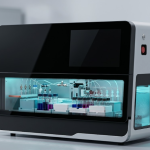



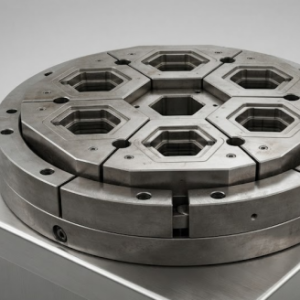


As biopharmaceutical research continues to advance, developing innovative therapeutic molecules is only part of the equation. Equally important is finding an effective way to deliver those molecules safely and efficiently to target cells. Whether working with mRNA vaccines, siRNA therapeutics, gene-editing platforms, or poorly soluble small molecules, researchers increasingly rely on lipid nanoparticles (LNPs), liposomes, and polymeric nanoparticles to improve stability and delivery efficiency.
However, producing these nanocarriers consistently is a complex process. Key quality attributes—including particle size, polydispersity index (PDI), encapsulation efficiency (EE), and batch reproducibility—must remain tightly controlled throughout development and manufacturing. This is why selecting a reliable nanoparticle formulation instrument has become a critical decision for both research laboratories and commercial biopharmaceutical companies.
Why Precision Mixing Is Essential for Nanoparticle Formulation
Nanoparticle formation depends on rapid and highly controlled solvent exchange.
For example, during LNP production, lipids dissolved in an organic solvent are rapidly mixed with an aqueous solution containing nucleic acids. If this mixing process is too slow or uneven, nanoparticles can grow irregularly, resulting in:
- Large particle size variations
- Poor encapsulation efficiency
- Higher polydispersity
- Reduced formulation stability
- Lower therapeutic performance
Traditional batch mixing methods often struggle to deliver the level of precision required for today's advanced drug delivery systems.
Modern microfluidic nanoparticle formulation instruments overcome these challenges by enabling rapid, controlled mixing at the microscale.
How Microfluidic Technology Improves Nanoparticle Quality
Microfluidic systems manipulate tiny streams of liquid inside precisely engineered microchannels. Through hydrodynamic focusing or controlled chaotic mixing, the diffusion distance between the organic and aqueous phases is dramatically reduced.
As a result, self-assembly occurs within milliseconds—often before uncontrolled aggregation can begin.
This highly controlled environment allows researchers to produce nanoparticles with:
- Narrow particle size distribution
- Low PDI values
- High encapsulation efficiency
- Excellent batch-to-batch reproducibility
XGen Bio has developed advanced microfluidic architectures that provide accurate control over critical formulation parameters such as Total Flow Rate (TFR) and Flow Rate Ratio (FRR). By optimizing these variables, researchers can consistently generate nanoparticles ranging from approximately 30 nm to 150 nm while maintaining excellent formulation uniformity.
Scaling from Laboratory Research to Clinical Manufacturing
One of the biggest challenges in nanomedicine development is maintaining product consistency during scale-up.
Many conventional microfluidic platforms perform well at laboratory volumes but encounter significant changes in particle characteristics when production volumes increase. Altering channel dimensions or flow conditions often changes mixing behavior, affecting critical quality attributes.
Instead of relying on traditional scale-up strategies, many advanced systems now utilize a scale-out approach.
Rather than enlarging the microchannels, multiple identical channels operate simultaneously. This parallelized architecture increases production capacity while maintaining identical mixing conditions.
XGen Bio incorporates this scalable microfluidic design to help researchers move efficiently from early-stage formulation development to pilot production and clinical manufacturing without compromising particle quality.
Benefits include:
- Consistent particle characteristics across production scales
- Simplified technology transfer
- Reduced process development time
- Improved manufacturing reliability
Reducing Fouling During Continuous Production
Continuous nanoparticle manufacturing introduces another important consideration—material fouling.
Over extended production runs, lipids, polymers, or other formulation components may gradually adhere to internal channel surfaces. This buildup can restrict flow, alter mixing performance, and reduce product consistency.
To address this challenge, modern nanoparticle formulation instruments incorporate several engineering improvements.
Surface Optimization
Carefully selected channel materials, including specialized glass or fluoropolymer surfaces, reduce molecular adhesion and minimize particle accumulation.
These low-adhesion surfaces help maintain stable flow conditions during long production cycles.
Automated Cleaning Systems
High-performance formulation platforms increasingly include integrated Clean-in-Place (CIP) functionality.
Automated cleaning cycles remove residual formulation materials between production runs, helping to:
- Prevent cross-contamination
- Maintain system cleanliness
- Reduce operator intervention
- Improve manufacturing efficiency
XGen Bio integrates automated cleaning technologies into its advanced microfluidic systems to support reliable multi-batch production.
Real-Time Process Monitoring Improves Manufacturing Control
Modern pharmaceutical manufacturing places increasing emphasis on Quality by Design (QbD) principles.
Rather than relying solely on end-product testing, manufacturers are adopting continuous monitoring technologies that provide real-time process feedback.
Advanced nanoparticle formulation instruments may integrate inline analytical tools capable of monitoring:
- Particle size
- Particle size distribution
- Polydispersity Index (PDI)
- Process stability
When formulation parameters begin to drift, automated control systems can immediately adjust flow conditions to restore optimal performance.
This closed-loop process control improves:
- Batch consistency
- Production efficiency
- Product quality
- Material utilization
Supporting Regulatory Compliance
As nanoparticle-based therapeutics move toward commercialization, regulatory expectations continue to increase.
Modern formulation platforms should support compliance with pharmaceutical quality standards by providing:
- Complete process traceability
- Electronic batch records
- Secure user management
- Audit trail functionality
- Data integrity protection
Software systems designed to support 21 CFR Part 11 requirements simplify documentation while helping manufacturers meet FDA and international regulatory expectations.
These digital capabilities become increasingly valuable as products advance from research laboratories into GMP manufacturing environments.
Why Choosing the Right Nanoparticle Formulation Instrument Supplier Matters
A nanoparticle formulation instrument represents far more than laboratory equipment—it becomes a central component of the entire development workflow.
When evaluating suppliers, organizations should consider several critical factors:
- Precision microfluidic design
- Stable and reproducible mixing performance
- Flexible flow parameter control
- Scalable manufacturing capability
- Automated cleaning functionality
- Regulatory-ready software architecture
- Reliable technical support and application expertise
Working with an experienced supplier can significantly reduce development risks while accelerating the transition from formulation research to commercial production.
Why Researchers Choose XGen Bio
XGen Bio focuses on developing advanced microfluidic solutions that support high-quality nanoparticle formulation across research, process development, and manufacturing applications.
Its nanoparticle formulation instruments are designed to deliver:
- Highly reproducible microfluidic mixing
- Accurate control of TFR and FRR
- Excellent particle size consistency
- High encapsulation efficiency
- Scalable parallel microfluidic architecture
- Automated cleaning capabilities
- Support for LNPs, liposomes, polymer nanoparticles, and other nanocarrier systems
- Digital process control suitable for pharmaceutical development
By combining precision engineering with application-focused innovation, XGen Bio helps researchers accelerate development while maintaining the quality standards required for modern nanomedicine.
Final Thoughts
As advanced drug delivery technologies continue to evolve, precision formulation has become one of the most important factors influencing therapeutic success. From laboratory discovery to clinical manufacturing, maintaining consistent nanoparticle quality requires highly controlled mixing, scalable production strategies, and intelligent process monitoring.
A high-performance nanoparticle formulation instrument provides the foundation for reproducible nanoparticle manufacturing, helping researchers improve formulation efficiency, reduce development risks, and accelerate commercialization.
With advanced microfluidic technology, scalable system design, and a commitment to precision engineering, XGen Bio continues to support pharmaceutical innovators developing the next generation of RNA therapeutics, gene therapies, vaccines, and targeted nanomedicines.