
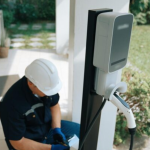






The choice between Level 1 and Level 2 EV charging looks simple until you dig into the electrical requirements. Level 1 plugs into a standard household outlet and charges slowly. Level 2 needs a 240 volt circuit and charges much faster. What most homeowners miss is that installing Level 2 charging is not just about running a new circuit. It requires an actual look at what the home's electrical service can handle, and in many Hampton Roads homes, the answer requires more work than expected. Here is how to think about the electrical side of the decision.
Level 1 Charging Basics
Level 1 is the fallback option that comes with every EV, and for some drivers it is enough on its own.
How Level 1 Works
Level 1 uses a standard 120 volt outlet, the same kind that powers a lamp or a phone charger. The cable that came with your EV plugs into the outlet on one end and into the car on the other. No installation is needed beyond having a working outlet in reach of the parking spot.
The Speed Reality
Level 1 adds 3 to 5 miles of range per hour of charging. Twelve hours of overnight charging gives you 40 to 60 miles of added range. For drivers who commute less than 20 miles per day and rarely take longer trips, that pace is enough to keep the car topped off.
The Electrical Impact
A Level 1 charger draws 12 amps continuously. That is a real load on the circuit but not usually a problem for the home electrical service overall. A standard 15 or 20 amp circuit handles it, though nothing else should share that circuit while the car is charging.
Level 2 Charging Basics
Level 2 is the standard home install for most EV owners because the charging speed changes how the car fits into daily life.
How Level 2 Works
Level 2 uses a 240 volt circuit, similar to what powers an electric dryer or an oven. A hardwired or plug in charger connects to that circuit and delivers power to the car at 4 to 10 times the rate of Level 1.
The Speed Difference
Level 2 adds 20 to 40 miles of range per hour depending on the charger amperage and the car's onboard charger capacity. An overnight charge fills most batteries from nearly empty to full. For drivers who use the car daily or take longer trips, Level 2 removes the daily anxiety of running low.
The Electrical Requirements
A Level 2 charger typically needs a 30 to 60 amp circuit. That amperage translates to a real electrical load, and the home's panel has to be able to handle it alongside everything else in the house.
Load Calculations That Actually Matter
The National Electrical Code requires a load calculation before adding any large new load to a home's electrical service. This is not optional.
What a Load Calculation Does
A licensed electrician adds up all the loads in the home, applies the code required demand factors, and calculates if the existing service can handle the new EV charger installation. The calculation looks at the main electrical panel capacity, the total connected loads, and how they add up in worst case scenarios.
Why Most 100 Amp Panels Fail
Homes built before 1990 often have 100 amp electrical service. Modern kitchens, HVAC systems, home offices, and appliances already push those panels close to capacity. Adding a 40 or 50 amp EV charger on top pushes the panel past what it can safely handle.
What Passes & What Fails
A 200 amp panel usually has room for a Level 2 charger without a service upgrade. A 100 amp panel usually does not have room without either a service upgrade or a load management device that limits EV charging during peak home use.
Panel Capacity Solutions
When the load calculation shows the panel cannot handle a Level 2 charger, there are a few paths forward.
Full Service Upgrade
Upgrading from 100 amp to 200 amp electrical service in Hampton Roads runs 2,500 to 4,500 dollars depending on the distance from the meter and the condition of the service drop. This is the cleanest solution because it also gives you capacity for future upgrades like heat pumps, additional appliances, or a second EV charger down the road.
Load Management Devices
A load management device connects to the EV charger and monitors the home electrical use in real time. When the home hits a preset threshold, the device pauses or slows the charging until the load drops. These devices cost 500 to 1,500 dollars installed and let you add Level 2 charging without a full service upgrade.
Sharing an Existing Circuit
Some Level 2 chargers can share a 240 volt circuit with an electric dryer using a switching device. This works but requires you to accept that the car and the dryer cannot run at the same time. For low mileage drivers, this can be a fine compromise.
Making the Choice
The right choice comes down to daily driving needs, home electrical capacity, and budget.
When Level 1 Makes Sense
Level 1 works for drivers who put fewer than 40 miles per day on the car, rarely take longer trips, and prefer to avoid electrical work in the house. There are no panel calculations to run, no permits to pull, and no installation to schedule. Plugging in becomes as simple as connecting a phone charger at the end of the day.
When Level 2 Makes Sense
Level 2 makes sense for drivers who use the car heavily, take road trips, or plan to add a second EV in the next few years. The install is worth the cost because the charging speed changes daily life around the car.
Working With the Right Electrician
Level 2 installs need to be done right the first time.
The Right Team for the Job
Licensed electricians pull the permits, run the load calculations, install the circuit to code, and coordinate with Dominion Energy for any service upgrade. Design build firms with a master electrician on staff, like the team at GSS757 in the Virginia Beach area, handle these installs as part of larger remodel projects when timing works, which keeps the electrical work coordinated across the whole house rather than as a series of separate service calls.
EV charging at home is a real convenience that pays off every day the car sits in the driveway. Getting the electrical setup right the first time avoids the frustration of a system that trips breakers or runs slower than it should.