




If you have a large dog at home, you already know what the floor goes through. Nails clicking across the surface, the occasional skid when they chase something, and the back-and-forth traffic from a dog that never really settles down. Wood flooring can hold up to all of that, but the species you choose makes a significant difference in how long it looks good.
The Janka hardness scale is the standard way the flooring industry measures how much force a wood species can resist before it dents. The test presses a steel ball into the wood surface and records the force required to embed it halfway. A higher Janka rating means the wood resists denting and surface damage better. For homes with large breeds, this number is worth paying attention to before you commit to a species.
How the Janka Scale Works in Practice
The scale runs from very soft species like pine, which sits around 870 lbf, up to extremely hard exotic species that can exceed 3,000 lbf. Domestic flooring staples like red oak come in at around 1,290 lbf, which is why it has been a go-to for residential floors for decades. Hard maple is higher at around 1,450 lbf. These are solid performers for most households, but in homes with 70-plus pound dogs, the bar goes up.
The Janka rating tells you how the wood handles compression and point-load impact. A large dog landing on its front paws after jumping off a couch concentrates a lot of force in a small area. A harder species recovers from that better than a softer one.
What Counts as a Pet-Friendly Hardness Rating
Most flooring professionals put the practical threshold for large dog households somewhere around 1,500 lbf. Below that, you will likely see surface marking over time, particularly in high-traffic areas around feeding stations, doors, and furniture the dog gravitates toward. Above 1,500 lbf, the floor still takes wear, but it holds up noticeably better between refinishing cycles.
That said, Janka rating is one factor among several. Finish quality, grain pattern, and the color of the wood all play into how visible scratches are over time. Tighter grain patterns show scratches less than open-grain species. Distressed or hand-scraped finishes already have surface texture that absorbs minor marks without them standing out.
Species That Perform Well in Large Pet Households
Hickory
Hickory sits at around 1,820 lbf on the Janka scale, making it one of the hardest domestic hardwood species available for residential flooring. It also has significant color variation within each board, which helps mask surface marks between refinishing cycles. The rustic character of hickory works well in open floor plans and country-style interiors, and it is widely available from domestic suppliers.
National Hardwood Flooring & Moulding carries hickory flooring in multiple widths and grades for homeowners who want high-hardness domestic wood without going to imported species.
White Oak
White oak lands around 1,360 lbf, which is slightly harder than red oak and has become significantly more popular in recent years. The grain is tighter than red oak, and the color range -- from pale blonde to medium brown -- suits the warm-tone direction that interior design has been moving toward in 2025 and 2026. White oak also takes stain well if a specific color is needed.
For large dog households, white oak is a reasonable middle-ground choice. It is not the hardest option available, but the tight grain and growing availability of wire-brushed and hand-scraped finishes make it practical.
Brazilian Cherry (Jatoba)
Brazilian cherry measures around 2,350 lbf, which puts it well above most domestic species. The reddish-brown color deepens over time with light exposure, which is a characteristic that surprises some homeowners who expect the floor to stay the same color it was in the sample. It is a very hard species that handles heavy foot traffic and pet activity well, but the color shift is worth knowing about before installation.
Ipe
Ipe registers around 3,500 lbf, which makes it one of the hardest wood species used in flooring applications. It is more common in decking, but it does appear in interior flooring for clients who want maximum hardness. At that hardness level, installation requires pre-drilling and more specialized tools. The cost is higher than most domestic options, and it is typically sourced through suppliers with access to imported hardwood inventory.
Cumaru
Cumaru comes in around 3,330 lbf and is sometimes positioned as a lower-cost alternative to ipe. The appearance is similar -- brown tones with some grain variation -- and the hardness is nearly equivalent. Like ipe, it requires some additional installation considerations due to its density.
Finish Matters as Much as Species
A high-Janka species with a thin or low-quality finish will still show wear. The finish sits on top of the wood and takes the first round of contact. A thicker aluminum oxide finish or a hard-wax oil finish adds a layer of protection that extends the time between refinishing. Wire-brushed textures on the surface also help by breaking up the visual uniformity that makes every scratch more obvious.
The Practical Takeaway
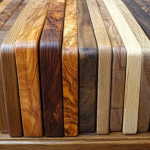
For most households with large breeds, the sweet spot is somewhere between 1,500 and 2,500 lbf. Species like hickory, hard maple, and Brazilian cherry cover that range and are available through specialty flooring suppliers with experience in domestic and imported hardwood. Going above 2,500 lbf is an option if the installation team is equipped for it, but for most homeowners, the mid-range species deliver the durability they need without the added complexity of working with extremely dense wood.
Bringing a species shortlist to a flooring showroom and looking at actual samples under the lighting conditions of the installation space is always a good step before making a final call.