



The global beauty peptide market covers cosmetic-grade peptide ingredients used in topical skin-care and related beauty formulations. Beauty peptides are short chains of amino acids that can be incorporated into skincare products to support formulations targeting firmness, elasticity and visible signs of aging.
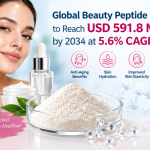
According to 24ChemicalResearch, the beauty peptide cosmetic ingredient market reached USD 362.5 million in 2025 and is estimated at USD 382.8 million in 2026. It is forecast to reach USD 591.8 million by 2034, representing a CAGR of 5.6% during 2026–2034. North America led the market with an estimated 34% of 2025 global value.
Read the complete Global Beauty Peptide Market report:
https://www.24chemicalresearch.com/reports/282324/global-beauty-peptide-market
Beauty Peptides: Active Ingredients for Skincare
Peptides are used in cosmetic formulations because of their role in skin-related biological processes, including signaling associated with collagen and elastin. Ingredient suppliers provide different peptide systems for formulations addressing anti-ageing, whitening, anti-inflammatory and repair applications. The market measures ingredient sales to brands, formulators and contract manufacturers rather than finished serums or oral supplements.
Demand is influenced by consumer interest in advanced skincare, scientifically positioned anti-ageing products, natural and effective cosmetic ingredients, and personalized skincare. Research into peptide synthesis, delivery systems and formulation stability is shaping product development.
What Is Driving Market Growth?
Consumer interest in proactive skincare and products targeting wrinkles and skin elasticity is a key driver. Awareness of peptide-based ingredients has contributed to interest in advanced cosmeceuticals, particularly in regions with aging consumer populations and established beauty markets.
Innovation in biotechnology and cosmetic science is expanding peptide complexes and delivery systems. Encapsulation and nanotechnology are among the approaches described for improving skin penetration and bioavailability. E-commerce and digital marketing also allow brands to communicate ingredient positioning and reach wider audiences.
Personalized beauty provides another opportunity through peptide blends tailored to individual skin concerns. The report also identifies nutricosmetic applications as an area of potential expansion, although its defined market scope focuses on cosmetic-grade ingredients for topical and related beauty formulations.
Production Costs, Regulation and Market Challenges
High-purity peptides require sophisticated synthesis, purification and quality-control processes. These requirements increase production costs and can lead to premium-priced finished products, limiting adoption among cost-sensitive consumers and regions.
Regulatory requirements vary across countries. Compliance with safety, efficacy and labeling standards can require substantial time and investment. Cosmetic appearance claims must also be distinguished from claims that a product treats or changes physiological conditions.
The market faces competition from ingredients such as retinoids, hyaluronic acid and growth factors, which have established consumer recognition. Supply-chain disruptions and reliance on specialized ingredient manufacturers can also contribute to delays and higher costs.
Read the full report for key data:
https://www.24chemicalresearch.com/reports/282324/global-beauty-peptide-market
Beauty Peptide Market Segmentation
The report evaluates the market by type, application, form and distribution channel.
By type, the market includes:
- Signal Peptides
- Neurotransmitter-Inhibiting Peptides
- Carrier Peptides
Signal Peptides were the leading type, accounting for an estimated 55% of 2025 market value.
By application, the market covers anti-ageing, whitening, anti-inflammatory & repair, and other applications. Anti-ageing represented an estimated 57% of 2025 value.
By form, the report covers aqueous concentrates, dry peptide powders and encapsulated peptide systems. Distribution channels include direct brand and formulator supply, ingredient distributor supply, and contract manufacturer supply.
Regional Outlook and Competitive Landscape
North America led the market with an estimated 34% share in 2025. Europe is an important source of differentiated ingredients, while formulation trends in South Korea, China and Japan support demand for multi-ingredient serums and targeted skincare actives. The report also covers Asia-Pacific, South America and the Middle East & Africa.
Key companies profiled include Lubrizol (Lipotec), Croda (Sederma), BASF, Ashland, Clariant and Helix BioMedix. The report describes the role of ingredient portfolios and research and development in expanding peptide applications.
Commercial performance depends on ingredient traceability, repeatable formulation outcomes, stability evidence and the ability to support cosmetic claims within applicable regulatory boundaries.
About 24 Chemical Research
24 Chemical Research specializes in chemical and materials market intelligence, covering specialty chemicals, polymers, surfactants, advanced materials and related industrial markets. Its research combines market sizing and forecasting with analysis of production, capacity, pricing, trade flows, applications, suppliers, regional demand and competitive positioning.
Read the full report for key data:
https://www.24chemicalresearch.com/reports/282324/global-beauty-peptide-market
Download a free Report sample:
https://www.24chemicalresearch.com/download-sample/282324/global-beauty-peptide-market
Contact 24 Chemical Research
Phone: +91 9169162030
Email: help@24chemicalresearch.com
Website: www.24chemicalresearch.com