
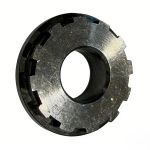
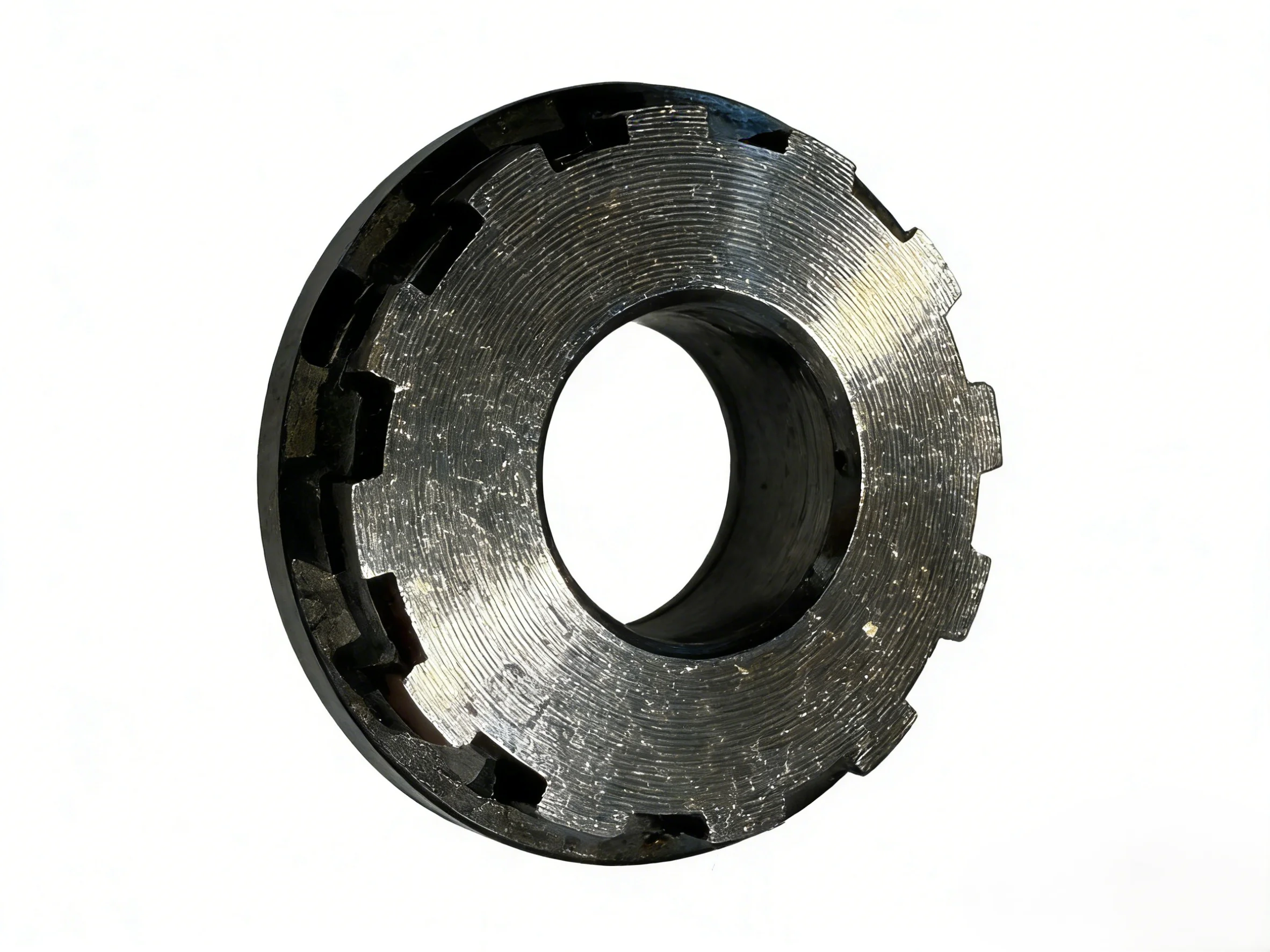
A Knurled Insert is a cylindrical metal insert with a knurled outer surface, designed to be pressed or installed into another component to provide a strong and secure threaded or structural interface. The knurled pattern increases friction and mechanical interlocking, preventing rotation and pull-out during use.
Although compact in size, the mechanical implications of a knurled insert are substantial. In assemblies subjected to torque, cyclic loading, thermal expansion, or vibration, thread integrity often determines overall system reliability. Conventional tapped threads in softer materials—such as aluminum alloys, polymers, or composite panels—are prone to stripping or deformation. The knurled insert addresses this weakness by redistributing stresses and reinforcing the interface.
HuiBo Railway integrates precision-engineered knurled inserts into demanding industrial and railway-grade applications, where structural reliability is measured not in months, but in decades of service life.
Mechanical Principle: Friction and Interference Engineering
The performance of a knurled insert is governed by two interacting mechanisms: radial interference fit and surface interlocking.
When the insert is pressed into a precisely machined bore, an interference fit is created. The outer diameter of the insert is intentionally slightly larger than the receiving hole. During installation, compressive forces deform the surrounding substrate material, generating radial contact pressure.
Simultaneously, the knurled ridges embed into the host material. This embedding action produces micro-scale mechanical anchors. The combined effect dramatically increases resistance to:
-
Rotational torque during bolt tightening
-
Axial pull-out forces
-
Micro-movement caused by vibration
-
Thermal expansion cycles
From a mechanical engineering perspective, retention strength is directly influenced by knurl depth, pitch geometry, insert hardness, and host material yield strength. Properly optimized, the system achieves predictable torque-out and pull-out performance characteristics.
Knurl Geometry: Designing for Load Distribution
Knurling is not decorative; it is functional surface engineering. The geometry of the knurl determines how load transfers from insert to substrate.
Straight knurls primarily enhance axial pull-out resistance. Diamond knurls provide multidirectional grip, offering balanced performance under both torsional and tensile loads. Helical or angled knurls distribute stress more gradually and may reduce localized material fracture in brittle substrates.
Precision control of knurl height and crest sharpness is critical. Excessively aggressive knurling can crack thin-walled housings. Insufficient depth reduces retention strength. Advanced CNC turning and controlled rolling processes ensure uniformity across production batches.
HuiBo Railway emphasizes dimensional repeatability and geometric consistency, especially for infrastructure-related components where failure is unacceptable.
Material Engineering and Surface Treatments
Material compatibility is fundamental to long-term reliability. Common knurled insert materials include carbon steel, stainless steel, brass, and high-strength alloy steel. Each serves distinct performance objectives.
In heavy-duty railway or transport systems, alloy steels with controlled heat treatment are preferred. These materials provide improved fatigue resistance and tensile strength. Stainless steels are selected where corrosion exposure is significant, such as outdoor rail assemblies or humid industrial environments.
Surface treatments further enhance durability. Zinc plating provides corrosion protection at moderate cost. Black oxide coatings improve wear characteristics. Phosphate treatments enhance adhesion when used with structural adhesives. Passivation strengthens corrosion resistance in stainless grades.
HuiBo Railway applies surface finishing processes calibrated to operational environments, ensuring inserts withstand vibration, moisture, and thermal stress without degradation.
Installation Science: Precision in Practice
Installation accuracy directly affects insert performance. A knurled insert is typically installed through controlled press-fit methods using hydraulic or servo-driven presses.
Critical installation parameters include:
-
Bore diameter tolerance
-
Surface roughness of receiving hole
-
Alignment accuracy
-
Controlled insertion force
-
Full seating depth
The interference range is carefully calculated, often between 0.02 mm and 0.08 mm depending on material pairing. Too much interference may induce cracking in thin or brittle materials. Too little reduces retention performance.
In thermoplastic applications, ultrasonic insertion may be used. In this process, localized heating allows the insert to embed seamlessly as the material re-solidifies around the knurl pattern.
HuiBo Railway provides technical guidance on bore preparation and installation force to ensure maximum retention performance in structural assemblies.
Application in Railway and Heavy Industry
In transport infrastructure systems, fasteners are continuously exposed to oscillatory motion, shock loading, and temperature fluctuations. Thread stripping or insert rotation can compromise safety and structural stability.
HuiBo Railway designs knurled inserts specifically for railway brackets, equipment housings, structural panels, and load-bearing assemblies. These inserts are engineered to maintain torque retention under prolonged vibration and dynamic loading.
Consistency in batch production is equally important. Infrastructure projects require dimensional uniformity across thousands of units. HuiBo Railway integrates statistical process control and multi-stage inspection protocols to guarantee precision across high-volume production.
Manufacturing Excellence and Quality Assurance
High-performance knurled inserts demand precise manufacturing processes:
-
CNC turning for concentricity control
-
Controlled knurl rolling for uniform ridge formation
-
Heat treatment for mechanical property optimization
-
Surface roughness calibration
-
Hardness verification testing
Advanced inspection equipment validates dimensional accuracy and coating thickness. Pull-out and torque-out testing simulate real-world mechanical stresses before shipment.
HuiBo Railway’s quality assurance protocols are structured to meet demanding industrial standards, ensuring structural integrity in critical assemblies.
Conclusion: Precision Retention Through Engineering
A knurled insert is not merely a fastening accessory; it is a structural reinforcement solution. Its cylindrical metal body and engineered knurled surface create a mechanical interlocking system capable of resisting rotation, pull-out, vibration, and fatigue stresses.
When performance reliability, load-bearing capacity, and long-term durability are essential, precision-engineered knurled inserts provide measurable advantages over direct tapping or adhesive-based retention methods.
Through rigorous material selection, advanced geometry control, and application-specific design, HuiBo Railway continues to deliver knurled insert solutions that meet the highest standards of industrial and railway engineering.
https://www.hbrailwayfastening.com/why-knurled-inserts-outperform-conventional-fastening.html