
Grooming tools designed for canine coat care come in countless varieties, each engineered to address specific fur characteristics and maintenance needs. Understanding what constitutes a Pet Brush and how different designs serve particular coat types helps owners select equipment that actually improves their dog's coat health rather than merely moving fur around ineffectively. Products from a specialized Pet Brush Factory offer targeted solutions, but recognizing which category suits your individual companion ensures you invest in tools that deliver genuine results.
A grooming implement for pets consists of a handle attached to bristles, pins, teeth, or blades arranged to interact with fur in ways that remove loose hair, detangle, distribute oils, or smooth the coat. The tremendous variation in canine coat types from short and smooth to long and curly demands equally diverse tool designs optimized for specific characteristics.
Short smooth coats found on breeds with single layer fur benefit from soft bristle brushes or rubber curry tools that remove loose surface hair and stimulate skin without the penetration longer coats require. These coats lack the undercoat depth that necessitates deep reaching teeth, so surface engagement tools prove most effective. The goal involves removing shed hair and distributing natural oils for shine rather than working through tangles or extracting dense undercoat.
Medium length single coats require slightly more robust tools than short smooth varieties. Pin brushes with moderate length teeth work well, penetrating far enough to address the full coat depth without the aggressive undercoat extraction double coated breeds demand. These implements smooth the coat while removing loose hair throughout the visible layer.
Long silky coats prone to tangling need tools that separate and detangle without damaging delicate hair strands. Slicker brushes with fine bent wire pins work through mats gently when used with proper technique. Wide tooth combs address initial detangling before finer brushes smooth and finish the coat. The combination approach prevents the breakage that occurs when trying to force fine tools through serious tangles.
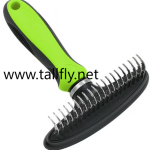
Double coated breeds with dense undercoat beneath longer guard hairs present the greatest grooming challenge and require specialized tools. Undercoat rakes featuring long, widely spaced teeth penetrate through the topcoat to reach the fluffy undercoat layer where most shedding originates. These tools must reach deep enough to engage loose undercoat without catching every guard hair, which would prevent proper penetration. A Pet Brush designed specifically for double coats makes the difference between superficial grooming and genuine undercoat management.
Curly coats that form tight ringlets or waves need slicker brushes that work through curls without straightening them excessively. The goal involves removing loose hair trapped within curl structure while maintaining the coat's natural texture. Pin spacing and flexibility matter enormously, as overly aggressive tools destroy curl patterns while too gentle implements fail to penetrate adequately.
Wire haired coats with harsh, coarse texture benefit from stripping tools or specialized brushes that maintain the coat's characteristic texture. Standard brushing alone often proves insufficient for these coats that require periodic professional attention for proper maintenance.
Coat density independent of length affects tool selection significantly. Thick, dense coats require tools with tooth strength and spacing to navigate through substantial hair volume. Sparse, thin coats need gentler implements that don't scratch exposed skin or damage limited hair.
Skin sensitivity varies among individual dogs regardless of coat type. Some dogs tolerate firm brushing while others require the softest possible tools to avoid discomfort. Observing your dog's response to different pressure levels helps determine appropriate tool firmness.
Shedding level influences whether you prioritize tools designed primarily for loose hair removal versus those focused on detangling or smoothing. Heavy shedders benefit from dedicated deshedding implements while minimal shedders need basic maintenance brushes.
Matching tools to your specific dog's coat characteristics rather than breed generalizations produces better results. Individual variation within breeds means that confirming your dog's actual coat type through observation trumps assuming all breed members share identical grooming needs.
For grooming implements designed for specific coat types from short smooth to dense double coats and everything between, visit https://www.tallfly.net/product/ to review brushes, rakes, and specialized tools matched to various canine fur characteristics.